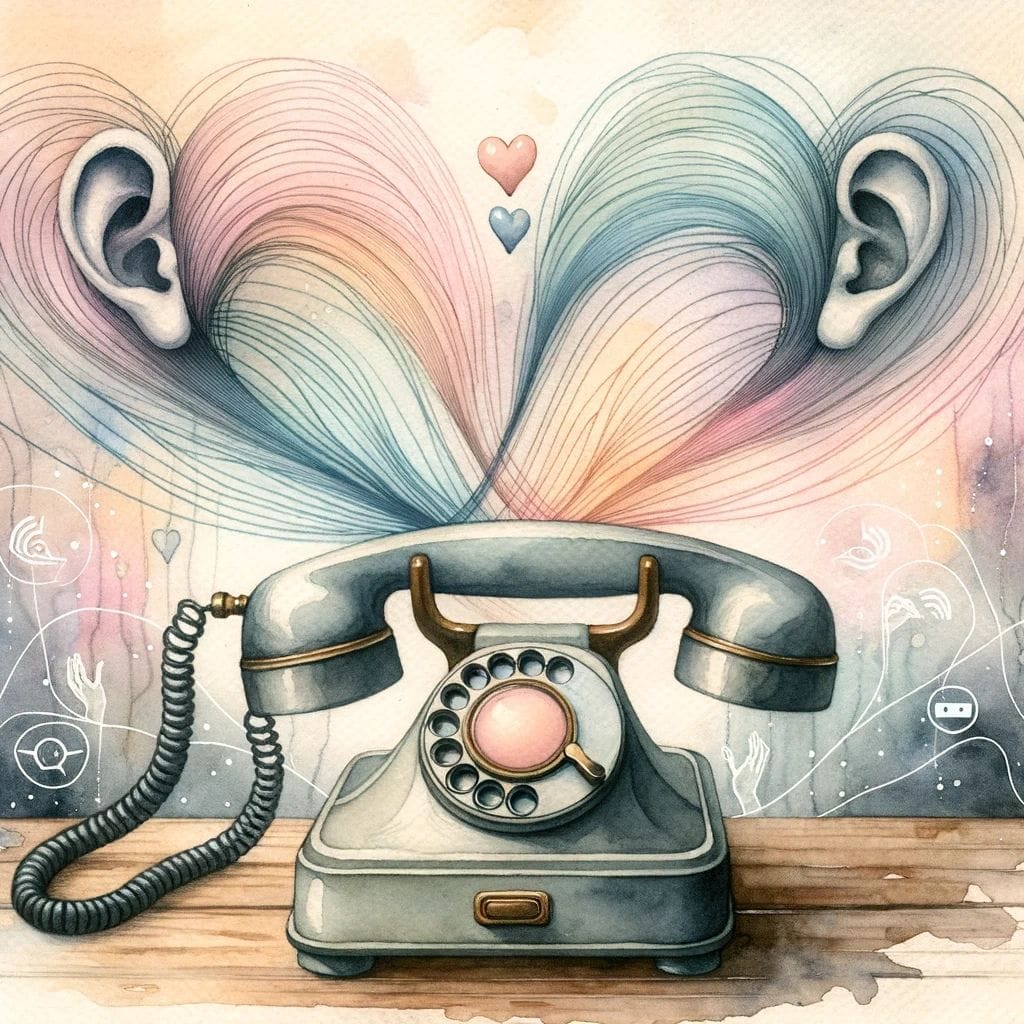
Communication isn't merely an exchange of words; rather, it serves as the foundational cornerstone shaping human relationships. Imagine it as an intricate tapestry woven from various elements: the words spoken, the sentiments expressed, and yes, the unspoken cues that we often decipher subconsciously. This dynamic not only influences our interaction with others but significantly shapes our self-perception, affecting our thoughts, emotions, and subsequent actions.
In the complex web of relationships that characterizes today's world — spanning personal, familial, and professional domains — effective communication remains the cohesive force that binds these interactions. The quality of our dialogues, the depth of our understanding, and the sincerity of our expressions collectively serve as indicators of the health and strength of our relationships. Through this post, we aim to navigate the complex landscape of communication, focusing on key aspects such as the art of listening, the significance of non-verbal cues, and the nuanced interplay between love and communication.
The Vital Role of Communication
Within the complexities of human interaction, communication serves dual roles: it is both the compass that guides us and the map that shows us the way. This multifaceted phenomenon transcends the simple exchange of spoken words. At its essence, communication is the conduit through which we share and decipher meaning, whether conveyed through language, tone, or even a fleeting glance. It is a dynamic, evolving process that gains depth and subtlety as relationships mature.
Initiating any form of relationship often starts with a foundational act of communication. A simple 'hello' might be the spark that ignites a friendship, a timely compliment could pave the way for an emotional connection, and a substantive conversation might just be the key to sealing a business agreement. Yet, the role of communication is not confined to beginnings; it is equally vital in maintaining and enriching these relationships. It becomes the medium for expressing our thoughts, emotions, aspirations, and concerns. The sheer joy of laughter shared with someone or the comfort gleaned from a compassionate word underlines the immeasurable impact of effective communication.
In a professional context, the imperative for clear and precise communication is paramount. It serves as the linchpin for effective collaboration, the nurturer of team dynamics, and the driver behind organizational success. Be it a high-stakes board meeting, a pivotal client presentation, or a seemingly mundane email, the quality of communication invariably shapes the outcome. Inefficient communication can result in misunderstandings, lost opportunities, and in severe cases, the disintegration of professional relationships.
On the personal front, the reach of effective communication is just as expansive. It nourishes the bonds of family nurtured over years and sustains friendships that withstand the vicissitudes of time. It becomes an indispensable tool in the nuanced navigation of romantic relationships, where even a minor misunderstanding can have substantial repercussions.
In essence, the caliber of your communication serves as a reflective mirror to the quality of your relationships. Whether your aim is to establish new connections or to enrich the ones you already have, grasping the indispensable role of communication is your initial step toward relational triumph.
Love and Communication
When delving into the lexicon of love, words frequently elevate beyond their literal connotations to serve as markers of deeper emotional undertones. Love — an emotion that has inspired an incalculable amount of poetry, melodies, and narratives — is fundamentally interconnected with the craft of communication. It isn't merely an ethereal concept; rather, it's a dynamic energy that demands expression, validation, and reciprocal acknowledgment.
In the tapestry of romantic relationships, skillful communication serves as the canvas where love's portrait takes shape. The preliminary strokes come from initial attractions, where nuanced signals and explicit expressions lay the groundwork. A fleeting glance, a warm smile, or a carefully chosen phrase can kindle the spark that burgeons into a substantial emotional connection. As the relationship evolves, the canvas grows richer with more complex designs—future aspirations, dreams held in common, and even periodic disagreements that serve as avenues for personal growth.
Yet, love's domain isn't restricted to romantic engagements; it manifests in friendships, familial connections, and even extends into the professional sphere to a degree. In these contexts, communication acts as the vessel carrying love's essence, whether it manifests as a supportive text to a friend, a meaningful dialogue with a family member, or a note of appreciation to a colleague. These actions, while outwardly simple, wield considerable power in reinforcing the love and respect foundational to these relationships.
Love, however, isn't a static phenomenon; it's an evolving, vital emotion requiring ongoing nourishment. The most potent sustenance for this comes from transparent, sincere communication. When we unveil our vulnerabilities, aspirations, and apprehensions, we are essentially opening the doors to our emotional sanctuary, inviting our loved ones to enter. This level of openness fortifies relational bonds while also enhancing our own emotional well-being.
In the context of romantic partnerships, a deficit in effective communication can be metaphorically likened to a garden starved of sunlight — leading to a slow decay of what was once a flourishing entity. Misunderstandings have the potential to result in emotional detachment, and a shortfall in open dialogue could stymie emotional development for both individuals involved.
To sum it up, love and communication are so intricately interwoven that the absence of one risks unraveling the other. They co-exist as two facets of the same entity, each contributing value and depth to the other.
Miscommunication and Its Consequences
If we consider communication as the architectural bridge connecting human souls, then miscommunication resembles a fissure in that very structure — a seemingly minor flaw that can, if neglected, escalate into a substantial barrier. Miscommunication isn't merely the absence of effective dialogue; rather, it serves as a disruptive element with the potential to cause a myriad of complications, ranging from minor misunderstandings to the irrevocable disintegration of relationships.
The root causes of miscommunication are often multifaceted and interlinked. They can originate from something as straightforward as an ill-chosen word to something more complex, like a foundational misalignment in understanding one another's viewpoints. In numerous instances, the discord between what is articulated and what is comprehended can be attributed to differing cultural contexts, emotional states, or even the specific circumstances under which the interaction takes place.
Within the realm of personal relationships, miscommunication can yield both immediate and enduring repercussions. Consider a scenario where one individual in a romantic partnership feels overlooked yet refrains from openly communicating this sentiment. Over time, such an emotional void can expand, fostering feelings of bitterness and detachment. Similarly, in friendships, the misinterpretation of a jest or an unanswered message can, on occasion, escalate into a discord potent enough to sever long-nurtured connections.
The stakes are comparably high within professional environments. An ambiguously conveyed instruction from leadership can lead to operational inefficiencies, diminished staff morale, and potentially even fiscal setbacks. Likewise, miscommunication among team members can disrupt a cooperative work atmosphere, resulting in project delays and decreased output. In relationships with clients, even a singular miscommunication event can tarnish an organization's reputation, potentially culminating in the loss of lucrative business collaborations.
Yet, the impact of miscommunication isn't solely external; it also profoundly influences our internal emotional state. The mental strain and anxiety induced by misunderstandings can contribute to a sense of emotional fatigue, affecting one's overall sense of well-being.
The encouraging news is that miscommunication is often either preventable or at least manageable. Strategies such as active listening, seeking clarification, and a commitment to understanding another's perspective can significantly mitigate its adverse effects.
Although miscommunication is an inescapable facet of human engagement, its negative outcomes can be substantially alleviated through deliberate effort and emotional acuity.
The Art of Listening
Listening, frequently misconceived as a passive endeavor, is, in actuality, an engaged form of communication that demands active participation. It transcends merely hearing spoken words to encompass understanding the emotions, intentions, and subtle nuances that accompany them. In this sense, listening functions as the silent yet powerful counterpart to verbal dialogue.
In the intricate landscape of human relationships, the concept of active listening emerges as a foundational element. This is a practice that goes beyond mere auditory perception to penetrate the emotional and psychological spheres. When you engage in active listening, you are not merely acknowledging the verbal expressions of the other individual but also validating their emotional state. Such validation engenders a feeling of emotional security, thereby fortifying relational bonds.
The mechanics of active listening involve several tangible actions, such as maintaining eye contact, offering nods of understanding, and employing verbal affirmations like 'I understand' or 'That makes sense.' Beyond these overt gestures, however, lies a mental stance of receptivity and curiosity. This entails putting aside preconceived notions and judgments to fully immerse oneself in the dialogue at hand.
Within the context of romantic partnerships, the role of active listening can be pivotal. It can mean the difference between a transient disagreement and a lingering issue. The practice offers a sanctuary for each partner to articulate themselves, secure in the knowledge that they will be both heard and understood. It serves as a navigational tool through the often convoluted emotional terrains that characterize romantic engagements.
Similarly, in professional settings, the importance of active listening is not to be underestimated. It facilitates a clearer grasp of project specifications, aids in the understanding of team dynamics, and can even serve as a conflict resolution mechanism. Leaders who practice active listening are more apt to engender trust and loyalty among their team members, thereby fostering an organizational culture that values open communication and teamwork.
However, the utility of listening extends beyond the immediate circle of relationships to influence our broader life experiences. It enriches our perception of the world, amplifies our empathy, and even enhances self-awareness. Through listening, we accumulate a variety of perspectives that augment our own, thereby widening our cognitive horizons and deepening our comprehension of the multifaceted human experience.
Overall, active listening is not merely an adjunct skill but a core component of effective communication. It necessitates a consistent effort, emotional intelligence, and a genuine curiosity to understand others. However, the dividends — be they in the form of stronger relationships, heightened emotional well-being, or a more nuanced worldview — make it an endeavor well worth investing in.
Communication Beyond Words
In the intricate sphere of human engagement, words represent merely one tool in the expansive toolkit of communication. Non-verbal cues — encompassing facial expressions, bodily postures, and even vocal tonality — often communicate volumes, serving as transparent windows into an individual's emotional condition, intentions, or degree of engagement. These cues, although subtle, significantly enrich the texture of our interactions, imparting dimensions of meaning that mere words could not adequately capture.
Facial expressions function as a universal lexicon, capable of conveying an extensive array of emotions without requiring translation. A smile can signify happiness, approval, or a welcoming demeanor; conversely, a frown can indicate displeasure or concern. These non-verbal cues frequently offer immediate feedback within interactions, allowing us to assess the emotional climate and tailor our communicative approach accordingly.
Body language serves as another crucial non-verbal indicator, supplying auxiliary context to our verbal expressions. Elements such as posture, eye contact, and even physical proximity to the listener can significantly modulate the impact of the communicated message. For example, arms crossed over the chest may imply a defensive or disengaged attitude, whereas open palms can suggest honesty and receptiveness.
Vocal tone further embellishes our verbal expressions with emotional hues. An identical sentence can carry vastly different implications depending on the tone with which it is articulated. A phrase as commonplace as "I'm fine" could express genuine contentment, sardonic dissatisfaction, or even indifferent resignation, depending solely on vocal inflection.
In professional environments, the ability to interpret these non-verbal cues can be as vital as understanding the spoken words. Such cues can yield insights into team dynamics, employee morale, and even the probability of securing a business agreement. For instance, a client's enthusiastic vocal tone and open body language could pre-indicate a positive response, even prior to any formal verbal agreement.
In the domain of personal relationships, these non-verbal signals assume an even more pivotal role. They provide nuanced insights into our partner's emotional landscape, aiding us in traversing sensitive topics or potentially defusing impending conflicts. A single, knowing glance exchanged between long-term partners can encapsulate more than a myriad of words, encapsulating years of mutual experiences and understandings.
However, the interpretation of non-verbal cues isn't invariably straightforward. Influences such as cultural distinctions, personal peculiarities, and even the specific situational context can skew their meaning. Hence, it remains crucial to approach these cues with a mindset of curiosity and a readiness to seek clarifications when ambiguities arise.
We can see that non-verbal communication augments our relational engagements, affording us a more intricate and holistic comprehension of one another. By attentively observing these silent indicators, we have the opportunity to elevate the caliber of our interactions, rendering them increasingly meaningful, genuine, and rewarding.
Conclusion
As we draw this explorative discourse on communication to a close, the multifaceted nature of this subject becomes increasingly clear. It is not merely a conduit for informational exchange but functions as the vital lifeblood permeating the structure of human relationships, imbuing them with depth, significance, and resilience. Communication, manifesting in a multitude of forms — verbal, non-verbal, and even those elusive emotional cues — provides the structural framework that both constructs and sustains our relational edifices.
Throughout this discussion, we have navigated the indispensable role of communication in initiating and fostering relationships, whether personal or professional in nature. We've delved into the intricate symbiosis between love and communication, each amplifying the other's significance. We have scrutinized the detrimental effects of miscommunication, acknowledging its capacity to destabilize relational equilibriums and even disturb our internal emotional sanctity. Furthermore, we have highlighted the pivotal nature of active listening, situating it as a cornerstone in the architecture of effective communication. Lastly, we have explored the realm of non-verbal cues, appreciating their capability to inject layers of subtlety and depth into our interactions.
This comprehensive examination serves to accentuate the intricacy and richness inherent in communication as a discipline. Though it is a dynamically evolving field, shaped by cultural norms, individual experiences, and even technological innovations, its core essence remains unaltered: the quest for mutual comprehension and emotional affinity.
In an era increasingly punctuated by digital correspondence and superficial engagements, the imperative for authentic, substantive communication stands more pronounced than ever. It is a skill, an art form, and perhaps most fundamentally, a commitment — a commitment to understanding and being understood, to forming connections and being connected, and ultimately, to enhancing both our own existence and the lives of those we engage with.
As we proceed from this point, let us imbue our daily interactions with the insights and understanding accrued through this dialogue. May these serve as a compass to guide us through the intricate maze that is human relationships. And in doing so, may we unearth greater depths of meaning, joy, and fulfillment in our lives.
Author’s Note
I am a fervent believer in the power of effective communication as both a professional and a relational tool. My journey into exploring the intricacies of human interaction has been enriched by a plethora of experiences, both personal and academic. I extend my heartfelt acknowledgment to all the individuals who have been a part of this journey — mentors, friends, and family; ex-partners to whom I have mostly failed miserably at communicating effectively — each of whom has contributed to my understanding of this expansive subject.
References
- Adler, R. B., & Proctor, R. F. II (2014), "Looking Out, Looking In", 15th Edition, Cengage Learning.
- Tannen, D. (1990), "You Just Don’t Understand: Women and Men in Conversation", HarperCollins.
- Goleman, D. (1995), "Emotional Intelligence", Bantam Books.
Online Resources
- "How Great Leaders Communicate”, Harvard Business Review. Link
- "Unlocking the Secrets of Effective Communication in Customer Service", Healthcare Professionals Group. Link
- "The Nonverbal Dictionary" by David B. Givens. Link
The topic of communication in relationships is a nuanced and complex one, widely discussed across various platforms. Among them, podcasts by Lex Fridman and Joe Rogan have hosted discussions that delve into the facets of relationships and communication. Here are some of their podcasts that touch on these themes:
Lex Fridman's Podcasts:
- Andrew Huberman in episode #393, titled "Relationships, Drama, Betrayal, Sex, and Love," delves into various aspects of relationships, although the specifics about communication as the backbone of relationships might not be overtly discussed. Podcast
- James Sexton, a divorce attorney, is featured in episode #396, discussing marriage, relationships, sex, lies, and love. This episode might have insights on the importance of communication in relationships. Podcast
- David Buss in episode #282, titled "Sex, Dating, Relationships," discusses evolutionary psychology perspectives on relationships. The conversation might touch upon the importance of communication, given the broad scope of relationship topics discussed. Podcast
Joe Rogan's Podcasts:
- In episode #1360, Nikki Glaser discusses relationships guided by the book "Getting to ‘I Do’: The Secret to Doing Relationships Right!" by Dr. Patricia Allen & Sandra Harmon, which might offer insights into communication as a fundamental aspect of relationships. Podcast
- Christopher Ryan, in episode #1099, explores modern relationships, mating, and why individuals may stray, possibly touching on communication's role within these dynamics. Podcast
- Christine Hassler, in episode #866, discusses self-help themes around freeing oneself from past expectations to improve the present, which may include discussions on improving communication within relationships. Podcast
These episodes encompass a wide array of discussions surrounding relationships from various angles. While not all of them may directly address communication as the backbone of relationships, they collectively provide a rich tapestry of dialogues that could offer insights into the pivotal role communication plays in fostering and maintaining relationships.
The curated selection of references and podcasts presented herein represents a fraction of the vast array of materials available on the intricate subject of communication within relationships. It is a personally recommended compilation tailored to provide diverse insights and perspectives. However, it is important to acknowledge that this collection is not exhaustive. The landscape of literature and digital content on this topic is both expansive and continually evolving, offering endless opportunities for learning and exploration. Should you wish to delve deeper into the nuances of interpersonal communication, you are encouraged to seek out additional sources that resonate with your quest for understanding.