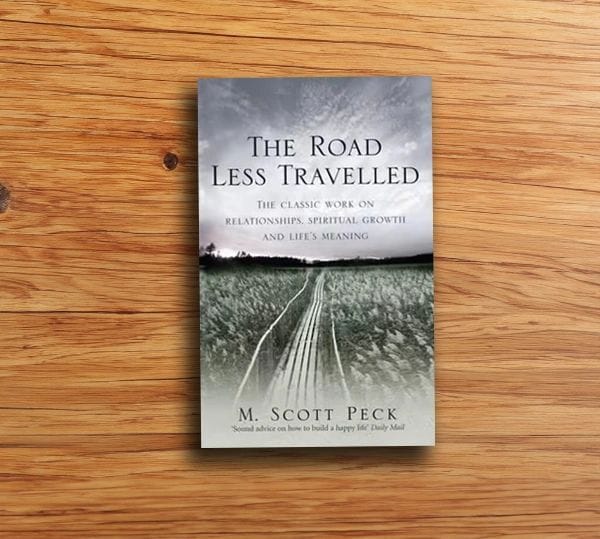
As an architect lays out a blueprint before the first brick is laid, so too must a writer chart the course of a book before the first word is penned. In the construction of my latest work, "Meaningfulness", I found my architect in M. Scott Peck, whose seminal book "The Road Less Traveled" served as a foundational text, providing both the scaffolding and the bedrock upon which I built my exploration of a life lived with purpose.
In "The Road Less Traveled", Peck presents us with an unvarnished look at the arduous path of personal growth, reminding us that the journey is fraught with the need for discipline, the pursuit of love as an action, and the perennial quest for spiritual evolution. These themes did not merely inform the structure of "Meaningfulness" but were the very materials I used to craft a narrative that aspires to guide readers towards a life that is not just lived, but lived with profound intent and connection.
In this book review, using an architectural analogy, I will dissect the intricate framework of "Meaningfulness", drawing parallels to Peck's influential work, to reveal how these two edifices of thought come together to form a cohesive structure that stands against the winds of superficiality and seeks to shelter those on their quest for depth and significance in life. Let us walk through the conceptual blueprint of "Meaningfulness", room by room, and uncover the design that makes it a haven for seekers of a meaningful existence.
Summary
"The Road Less Traveled", authored by M. Scott Peck, is a pivotal text in the genres of self-help and psychology, unveiled to the public in 1978. It opens with the succinct and impactful statement, "Life is difficult". This introductory proclamation lays the groundwork for the book's central thesis: the acknowledgment and acceptance of life's intrinsic trials are vital to one's personal development.
The structure of the book is segmented into four principal sections:
- Discipline: Peck underscores the significance of discipline, which he deems indispensable for emotional, spiritual, and psychological wellness. He advocates for confronting problems directly, positing that evasion or neglect only intensifies complications over time. Discipline entails mastering the art of deferred gratification, taking ownership of one's life, and embracing the truths of the external world.
- Love: In this segment, Peck elucidates the essence of genuine love, making a clear demarcation from the concept of romantic love. He conceptualizes love as an act, a deliberate endeavor to expand one's ego boundaries to encompass others, rather than merely an emotion. Peck contends that love is a variant of labor or bravery that demands sustained effort to preserve, and that authentic love is oriented towards fostering spiritual growth in oneself or others.
- Growth and Religion: Here, Peck delves into the premise that the spiritual maturation of humans is a trajectory towards increasing complexity. He broaches topics such as the nature of religion, the phenomenon of grace, and the psychological evolution of individuals. He posits that religious experiences can be cogently elucidated within the framework of human consciousness.
- Grace: In the concluding part, Peck addresses grace, which he characterizes as a potent influence emanating from beyond human consciousness, promoting the spiritual development of individuals. He presents a variety of stories to exemplify how grace can intervene in daily life, steering our deeds and pathways in frequently unforeseen manners.
Throughout the narrative, Peck interweaves a mosaic of personal anecdotes, case studies from his psychiatric practice, and introspective reflections to navigate through intricate psychological themes in a fashion that resonates with a broad readership.
The prevailing message of "The Road Less Traveled" is that personal growth is an ongoing journey of maturation and confronting life's challenges directly. Peck posits that by imbibing and exercising discipline and love, we can metamorphose into more mature and spiritually advanced beings.
Foundation and Framework:
Every structure begins with a foundation, a steadfast underpinning upon which all else is built. In "Meaningfulness", the bedrock is the understanding that life’s challenges are not merely obstacles but opportunities — echoing Peck's axiom, "Life is difficult". This acceptance acts as the substructure that supports the weighty exploration of what constitutes a life of substance.
Upon this foundation, the framework was erected, with beams of discipline as described by Peck — delaying gratification, accepting responsibility, and dedication to truth. These principles form the load-bearing walls within "Meaningfulness", enclosing spaces where readers can reflect on their personal growth. Just as Peck emphasized the importance of embracing life's challenges, "Meaningfulness" builds upon that ethos, encouraging readers to face their adversities with resilience and to see past immediate pleasures to the grand design of their lives.
In laying out this blueprint, I drew upon the architectural motifs of "The Road Less Traveled" to design a structure that was both sturdy and flexible — capable of withstanding the tumults of life while adapting to the unique contours of each individual's journey towards meaning. With Peck's work as a scaffold, I endeavored to construct a narrative that would support and elevate the reader's pursuit of a life that is not only lived but cherished for its depth and significance.
Interior Design: Love and Relationships
In the interior spaces of "Meaningfulness", where the heart of the home beats strongest, I focused on the intricate designs of love and relationships. Here, I drew inspiration from the intimate passages of "The Road Less Traveled", where love is not a mere sentiment but an active endeavor, a veritable labor of construction upon which the edifice of a meaningful life is built.
Peck taught that love is a form of work, an extension of oneself, which is a concept I wove into the very fabric of "Meaningfulness". The rooms dedicated to love in my book are designed with the intention of nurturing growth. They are spaces for reflection, adorned with stories and insights that emphasize the importance of constructing and maintaining strong, authentic connections with others.
The corridors connecting these rooms in "Meaningfulness" represent the journey of cultivating relationships that are not only structurally sound but also aesthetically pleasing and spiritually enriching. They are thoroughfares that invite readers to traverse the distance between solitude and communion, between self-love and the love for others — a journey that Peck maps out with the precision of a master architect.
The furnishings in these rooms — the personal anecdotes, the actionable advice — are chosen for their durability and their ability to withstand the wear and tear of life. They serve as a reminder that the quality of our relationships is not determined by the fleetingness of passion but by the enduring strength of commitment and the continuous effort to understand and be understood.
Exterior Facade: Growth and Religion
The external facade of "Meaningfulness" reflects the nuanced complexities of personal growth and spiritual exploration, akin to the stained glass windows and robust stonework of a grand cathedral, inspired by Peck's own foray into the realms of growth and religion. Peck's perspective that human spiritual development is a journey toward greater complexity is mirrored in the external narratives of "Meaningfulness," which portray the evolution of the self as an architectural masterpiece, ever-expanding and refining with time.
Just as a building's facade can reveal much about its interior, the stories and lessons of "Meaningfulness" are designed to showcase the transformative power of embracing one's spiritual path. The book's exterior chapters compel readers to look beyond the superficial, much like Peck urges us to transcend traditional values and spiritual growth.
In constructing this facade, I applied the mortar of Peck's wisdom to bind together tales of triumph and tribulation, creating a mosaic that illustrates the beauty of a life dedicated to spiritual maturation. These stories serve as buttresses that support the overarching theme: spirituality is not about strict adherence to dogma but the continuous, conscious effort to connect with something greater than oneself.
The dialogue between "Meaningfulness" and "The Road Less Traveled" becomes most apparent in this aspect of the design. Peck's exploration of religion as a channel for growth laid the groundwork for my examination of how faith and spirituality can serve as cornerstones for a life imbued with purpose and meaning.
Landscaping: The Role of Grace and Serendipity
The landscaping around the structure of "Meaningfulness" is an homage to the unexpected, the unearned, the serendipitous elements of life that Peck eloquently termed "grace". This unpredictable yet fertile ground in which the seeds of spiritual growth are sown is an essential aspect of the blueprint. Peck's discussion of grace as an outside force that nurtures growth and assists us in our life's journey finds its reflection in the winding paths and surprising vistas that I chart in "Meaningfulness".
In my book, grace is the wildflower garden that blooms in the open spaces left between our carefully laid plans. It represents the moments of unanticipated joy and the fortuitous intersections with others that can redirect the courses of our lives. Just as an architect must account for the natural elements that will shape and sometimes alter the intended design, so too must we recognize and appreciate the role of grace in shaping our search for meaning.
The layout of these gardens is intentionally unstructured, a deliberate contrast to the order and symmetry of the interior spaces. It is in these external chapters that I explore the concept of grace as a natural, albeit sometimes overlooked, component of the human experience. I suggest that grace, much like Peck's view, is a transformative force that often manifests in mysterious ways, influencing our actions and our life paths in often unexpected ways.
By integrating the concept of grace into the narrative, "Meaningfulness" becomes not just a manual for constructing a life of purpose but also a guide for navigating the beautiful unpredictability of existence. Just as Peck's work acknowledges the gifts of grace in personal growth, "Meaningfulness" invites readers to appreciate the unplanned, the spontaneous, and the miraculous in their quest for a life of depth and significance.
Renovation and Expansion: Continuous Growth and Adaptation
No edifice, once completed, remains unaltered forever. In "Meaningfulness", I propose that the human spirit is akin to a living structure, always in need of renovation and expansion to accommodate the growth and change that life brings. This concept is a natural progression of Peck's views on the dynamic nature of personal development—the idea that our psychological and spiritual buildings are never truly finished.
In the concluding chapters of "Meaningfulness", I encourage readers to become architects of their own lives, to continuously assess and modify their beliefs, behaviors, and relationships. Peck's work underlines the necessity of revisiting and sometimes reworking our life's design to enhance its resilience and beauty. It is this willingness to renovate our inner worlds that allows for a life of enduring meaningfulness.
As readers move through the final sections of "Meaningfulness," they are prompted to consider the parts of their lives that may require remodeling— preconceptions that no longer serve, habits that undermine growth, relationships that need reinforcement or reconfiguration. Inspired by "The Road Less Traveled", the book does not shy away from suggesting that sometimes the most profound growth comes from tearing down outdated structures and building anew.
The renovation section of "Meaningfulness" does not merely suggest change for change's sake but advocates for mindful transformation — assessing the integrity of one's life structure, preserving what is still strong and functional, and altering what no longer fits. Just as an architect must balance the historical integrity of a building with the need for modern functionality, so must we balance our core values with the necessity for evolution in our quest for a meaningful existence.
This process of continuous growth and adaptation is perhaps the most crucial aspect of the architectural blueprint laid out in "Meaningfulness", a testament to the influence of Peck's visionary work on my own. It is a reminder that the road less traveled is not a straight path but a winding one, replete with opportunities for reconstruction and renewal.
Architectural Integrity:
In the final assessment of the architectural integrity of "Meaningfulness", it is essential to consider how the building blocks inspired by "The Road Less Traveled" have come together to form a complete and harmonious structure. Peck's foundational principles — discipline, love, spiritual growth, and grace — are not only the underlying supports but also the embellishments that give character and depth to the entire construct of meaningful living.
Reflecting on my journey of writing "Meaningfulness", I see how Peck's work acted as a compass, guiding the drafting of each chapter, ensuring that the core message remained true to the pursuit of an authentically significant life. The blueprint of my book, while unique in its floor plan, upholds the structural soundness of Peck's psychological and spiritual insights, creating a sanctuary where readers can find respite and inspiration.
As with any edifice, "Meaningfulness" is designed to be more than just a shelter from the existential elements; it is intended to be a home where one can dwell in contemplation and action. It stands as a testament to the enduring relevance of Peck's teachings and their capacity to inform and transform our contemporary quest for a life filled with purpose and connection.
In closing, "Meaningfulness" does not claim to be a grand palace promising grandeur, but rather a well-crafted abode where each stone is laid with intention and care. It is my hope that as readers walk through its halls, they will appreciate the craftsmanship that went into its making and feel encouraged to take up the tools provided to build their own edifice of a meaningful life.
Peck began with the truth that "Life is difficult". "Meaningfulness" accepts this truth and adds, "But in its challenges, we find our greatest architecture — a life of profound meaning". This architectural review of "Meaningfulness" reveals a structure built not just to stand the test of time, but to evolve with it, promising each inhabitant the opportunity to carve out their unique space within its walls.
Conclusion and Final Thoughts
With the blueprint of "Meaningfulness" laid bare, it becomes clear that the edifice we construct in our pursuit of a profound existence is an ever-evolving monument to our resilience and commitment to growth. Just as an architect hands over the keys to a building's occupants, I now pass on "Meaningfulness" to you, the reader, to inhabit and explore its corridors and rooms, to make of it what you will.
Inhabiting this space, you are invited to reflect on the strength of your foundations, the beauty of your interior design, the majesty of your facade, the natural harmony of your landscaping, and the necessity for continued renovation. It is a space that I hope will inspire you to contemplate, to connect, and to cherish the unpredictable and ineffable moments of grace that life offers.
As you take up residence within the pages of "Meaningfulness", may you find the insights shared to be not mere words on a page but windows and doors opening to new perspectives. May the architectural integrity of the book stand as a testament to the possibility of constructing a life of deep, resonant meaning — a life that, in its design and execution, honors the complexity and richness of the human experience.
The path of meaningfulness is a personal and collective journey, one that is continually unfolding. "The Road Less Traveled" provided the surveying tools to chart this territory, and "Meaningfulness" is the structure that arose from that initial survey. As with any structure, its true value is realized in the lives that it enriches. May your journey through "Meaningfulness" be both a homecoming and a departure point for further exploration into the landscapes of your life.
And so, the architectural review of "Meaningfulness" concludes not with an end, but with an invitation to begin anew, to continuously engage with the process of building and rebuilding, in the knowledge that the quest for meaning is an infinite one, offering as many possibilities as there are stars in the sky. Each of us is an architect of our fate, and with every choice and every action, we add to the edifice of our existence. May you build wisely and well.
Reference:
- Peck, M. S. (1978), "The Road Less Traveled: A New Psychology of Love, Traditional Values and Spiritual Growth", Simon & Schuster.
Disclaimer:
Please note that the views and interpretations expressed in this review are based on my personal reading and analysis, and its influence on my own work, "Meaningfulness". The thoughts and conclusions drawn herein are subjective and reflect my individual experience with these texts.
I fully acknowledge and celebrate the diversity of opinions and perspectives that exist, and I welcome readers to engage with these works in ways that resonate with their own unique understandings and experiences. This review is not an authoritative critique but rather an invitation to dialogue and discourse.
You are wholly free to disagree, to challenge, and to offer alternative readings that enrich our collective exploration of these profound subjects.
Note:
The book "Meaningfulness" is currently in its final editing stage and will be available somewhere around mid-2024 for those seeking to explore deeper dimensions of purpose and meaning. Join the newsletter to be updated and notified on the upcoming releases and when the book becomes available.