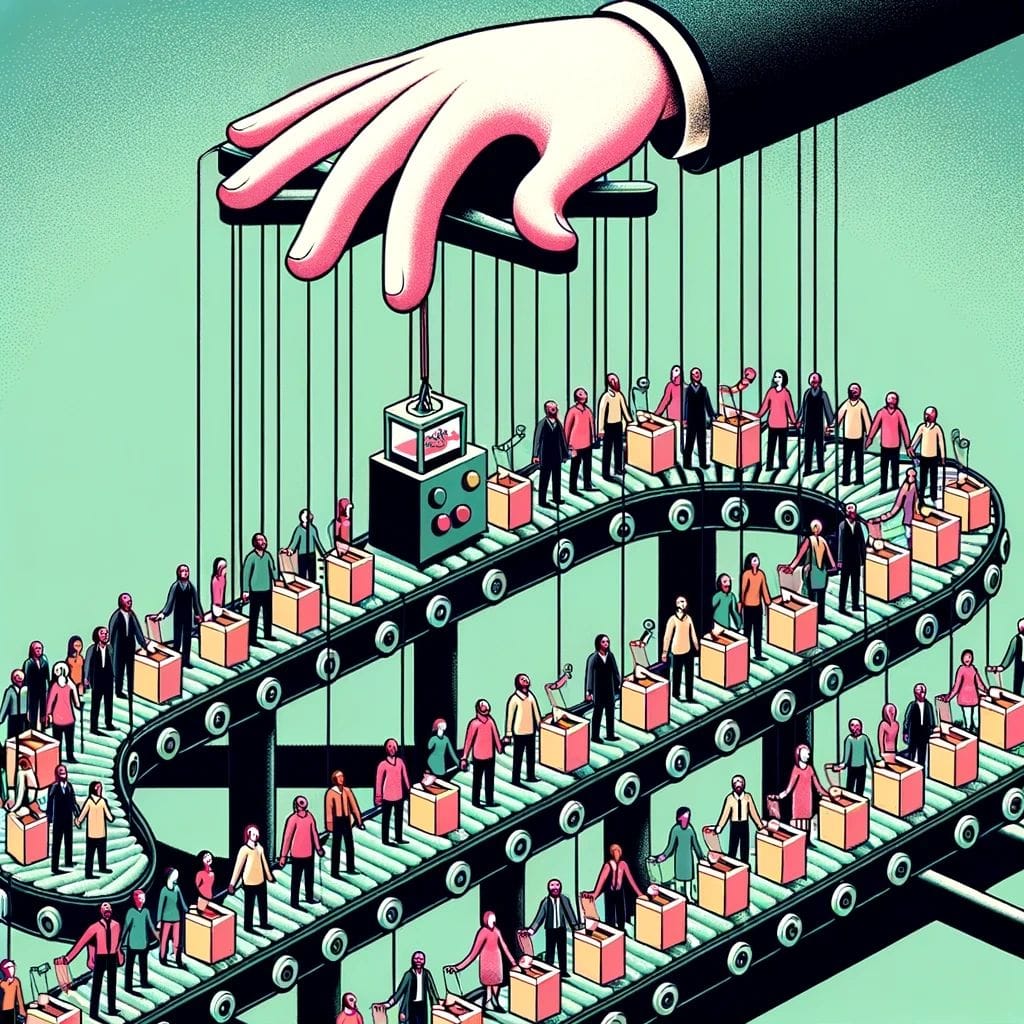
Have you ever paused to wonder why some individuals exude contentment with scarcely a possession to their name, while others, encased in luxury, seem to be on an endless quest for more? This divergence is not merely a matter of personal preference or circumstance; it's indicative of a much deeper conflict that pervades our society and shapes our lives — the battle between consumerism and meaningfulness.
We're continually bombarded with messages urging us to acquire the latest gadgets, to climb the social ladder, to aspire for more. But more of what, exactly? More stuff? More status? And at what cost? On the flip side, we encounter stories of individuals who've eschewed the trappings of material abundance for a life rich in experiences, relationships, and purpose. Which path leads to genuine happiness and fulfillment? And what are the broader implications for society and for us as individuals?
This post seeks to dissect these intricate questions, delving into the psychological, economic, and social impacts of these opposing life philosophies. Through a nuanced lens, we will explore why a life centered around meaningfulness not only benefits the individual but has far-reaching positive ramifications for society at large.
Layer 1: The Basics
Consumerism
Consumerism, in its essence, is a cultural orientation that emphasizes the acquisition of material goods as a path to happiness and social standing. The narrative is simple: the more you have, the happier you'll be. From flashy cars to sprawling homes, from the latest smartphones to designer clothes, consumerism propagates the idea that material possessions are the yardstick of success and fulfillment. Ads, social media influencers, and even our social circles often validate this perspective, driving the message home: "Buy more, be more."
Meaningfulness
Contrast this with the philosophy of meaningfulness, which advocates for a life focused on experiences, relationships, and a sense of purpose. Meaningfulness is not about amassing wealth or material goods but about enriching the soul. It encourages us to invest in experiences that offer lasting joy — be it a tranquil walk in the woods, a heartfelt conversation with a loved one, or the satisfaction derived from helping others. Meaningfulness is rooted in the quality of our interactions with the world around us, urging us to seek depth over breadth, connection over possession, and purpose over superficiality.
These two paradigms offer fundamentally different routes to what we all seek — happiness and fulfillment. But which one holds the key to a life well-lived? To answer this, we need to peel back the layers and delve deeper into the complexities of these philosophies.
Transition to Layer 2
We've scratched the surface, outlining the basic tenets of consumerism and meaningfulness. But life is rarely black and white; it's a tapestry of grays, woven from the choices we make and the values we hold dear. To truly grasp the impact of these philosophies on our lives and society, we must delve deeper. We must ask ourselves: What are the psychological reverberations of a consumerist lifestyle compared to a meaningful one? How do these choices shape our economic landscape? And what are the social dynamics fueled by these opposing views?
Let's dissect these layers to better understand the long-term consequences and intrinsic values of each philosophy, equipping ourselves to make informed decisions in our pursuit of a fulfilling life.
Layer 2: Intermediate Complexity
Psychological Impact
Consumerism offers an enticing allure — the high of a new purchase, the thrill of flaunting a status symbol, the temporary boost in self-esteem. But it's essential to understand that these highs are often just that — temporary. Research in psychology suggests that the joy from material acquisition tends to be fleeting, giving way to a phenomenon known as "hedonic adaptation." We quickly grow accustomed to new possessions, and the initial excitement wanes, leaving us craving the next big thing. This cycle, colloquially termed the "hedonic treadmill," keeps us running in place, chasing elusive happiness but never quite catching it.
On the other hand, meaningfulness offers a more enduring form of well-being. Engaging in meaningful activities — whether it's spending quality time with loved ones, pursuing a passion, or contributing to a cause greater than oneself — generates a sense of lasting contentment. The psychological rewards are rich and multifaceted, ranging from increased self-esteem to lower levels of stress and anxiety. Unlike the fleeting joy of consumerism, the happiness derived from a meaningful life tends to be resilient and long-lasting.
Economic Consequences
Consumerism is often lauded for its role in driving economic growth. After all, high consumption levels fuel production, create jobs, and stimulate innovation. However, this comes at a steep cost: the depletion of natural resources, increased waste, and environmental degradation. The relentless pursuit of "more" places a significant strain on our planet's limited resources, raising questions about the sustainability of a consumerist society in the long run.
Meaningfulness, by contrast, advocates for a more sustainable lifestyle. The focus shifts from "having" to "being," from acquiring to experiencing. This philosophical shift has economic implications as well, as it often leads to reduced consumption and a more mindful approach to resource utilization. A society centered around meaningfulness would likely prioritize sustainability and long-term well-being over short-term gains, leading to a more balanced and equitable economic landscape.
Social Fabric
Consumerism not only impacts us on an individual level but also shapes the social dynamics of our communities. In a consumerist society, the emphasis on material wealth can foster competition, social comparison, and even inequality. The incessant quest for "more" can create divisions, engendering a culture where self-worth is intrinsically linked to material success.
Meaningfulness offers a counter-narrative, one that values community, empathy, and shared experiences. In a society that prioritizes meaningfulness, the focus would likely shift from competition to collaboration, from individualism to community well-being. Such a society would be more cohesive, marked by mutual respect and a shared sense of purpose.
In summary, the choices between consumerism and meaningfulness have far-reaching implications that go beyond personal preferences. They shape our mental well-being, influence our economic systems, and define the very fabric of our communities.
Transition to Layer 3
We've delved into the psychological, economic, and social intricacies of consumerism and meaningfulness. However, there's still a more profound layer to explore — one that examines the advanced implications of these life philosophies. Are you ready to go deeper and unravel the complexities that lie beneath the surface? Are you curious to know how these paradigms contribute to the larger existential questions that define our place in the world and our relationship with it?
Let's unearth these advanced insights, as we explore the broader ecological and interpersonal dynamics influenced by our choices.
Layer 3: Advanced Insights
Ecological Footprint
One cannot discuss consumerism without acknowledging its environmental toll. The philosophy of "more is better" has significant ecological ramifications. From carbon emissions associated with mass production to waste generated by disposable consumer goods, the environmental cost is staggering. Consumerism is, in many ways, at odds with the concept of sustainability. It promotes a lifestyle that is dependent on constant consumption, which in turn exacerbates resource depletion and environmental degradation.
Meaningfulness, however, offers a more harmonious relationship with the environment. When the focus shifts from material acquisition to experiential richness, the ecological footprint naturally diminishes. Choosing a bike ride over a shopping spree, or a home-cooked meal with loved ones over the latest tech gadget, contributes to a lifestyle that is more in balance with the planet. It's a perspective that encourages us to be stewards rather than exploiters of the Earth, fostering a sense of responsibility that extends beyond our immediate needs.
Interpersonal Relationships
Consumerism's impact isn't limited to the individual or the planet; it also shapes our interpersonal dynamics. In a society driven by materialism, relationships can become transactional. People may be viewed through the lens of their utility or status, reducing the richness and complexity of human interaction to mere exchanges of material or social capital. This transactional nature can lead to superficial relationships that lack depth and emotional connection.
In contrast, a life centered around meaningfulness naturally cultivates richer interpersonal relationships. When we derive joy from shared experiences and meaningful conversations, when we invest time in truly getting to know others, when we engage in acts of kindness and compassion, we create bonds that are both emotionally rewarding and psychologically fulfilling. These relationships, grounded in mutual respect and shared values, offer a counterpoint to the isolation and detachment that can be fostered by a consumerist mindset.
The advanced insights into consumerism and meaningfulness reveal a multi-dimensional picture. They show that the choices we make have far-reaching implications, affecting not just our own lives but also our planet and the people around us. These philosophies are not merely paths to personal happiness; they are also frameworks that shape our ethical stance, our social interactions, and our legacy.
Synthesis
Consumerism and meaningfulness are not just isolated philosophies; they are intricate frameworks that intersect with various aspects of our lives and society. From the individual psyche to global ecosystems, from economic paradigms to social fabric — each philosophy casts ripples that extend far beyond the self.
Consumerism, with its focus on material accumulation, offers short-lived highs that often come at the expense of long-term well-being, equitable economies, and a sustainable planet. It's a framework that can perpetuate cycles of dissatisfaction, inequality, and environmental degradation.
Meaningfulness, on the other hand, provides a more holistic approach to life. It promotes an enduring sense of well-being, fosters equitable and sustainable economic practices, and cultivates rich, fulfilling relationships. Most importantly, it encourages us to be conscientious citizens of the world, mindful of our impact on the planet and each other.
In bringing together these various layers of understanding, we see that consumerism and meaningfulness offer more than just routes to personal happiness. They define our collective ethos, shaping the kind of society we live in and the legacy we leave for future generations. The choice between consumerism and meaningfulness, therefore, is not merely personal; it's profoundly societal and, indeed, existential.
Conclusion
In navigating the maze of life, we're often presented with a dichotomy: a life of consumerism marked by material abundance, or a life of meaningfulness characterized by experiential richness and emotional depth. The implications of this choice reach far beyond individual happiness, influencing the economic, social, and environmental landscapes we inhabit.
As we've explored, consumerism, despite its immediate allure, often comes at a high price — not just for the individual but for society and the planet. Meaningfulness offers an alternative — a fulfilling and sustainable way of living that enriches not just us but also the communities we are a part of and the world we share.
So, as you ponder the intricate tapestry of your life, consider what truly brings you joy. Is it the ephemeral thrill of a new purchase, or the enduring satisfaction of a meaningful interaction? Is it the status conferred by material wealth, or the inner peace derived from a life aligned with your values? As you grapple with these questions, remember: the choices you make shape not just your own destiny but also the world around you. Choose wisely.
Author’s Note
The journey of exploring the nuances between consumerism and meaningfulness has been both enlightening and transformative. While the views expressed here are my own, they are deeply influenced by a lifetime of observations, interactions, and scholarly engagements. I extend my heartfelt gratitude to thought leaders, friends, and communities who have enriched my understanding of these complex issues.
References
- Zaspel, J. (2023), "The Hidden Costs of Consumerism: Why We Need a Paradigm Shift", Medium. Link
Online Resources
- Dubois, D. (2014), "The Power of Consumerism: With Great Power Comes Great Responsibility", TEDx Talk. Link
- Taylor, K. (2016), "Finding Meaning in a Material World", Philosophy Talk. Link
- Stein, Z. (2023), "A Guide to Sustainable Living", Carbon Collective. Link
In conclusion, this exploration into the juxtaposition of consumerism and meaningfulness is merely the tip of the iceberg. The complexities and nuances of these philosophies are vast and deeply interwoven into the fabric of our lives and society. While I have endeavored to provide a comprehensive overview, it's important to recognize that this represents my perspective and is not indicative of the views of any organization I may be affiliated with. The dialogue around consumerism and meaningfulness is ongoing and evolving, and I encourage readers to continue this exploration, adding their voices and experiences to this critical conversation.