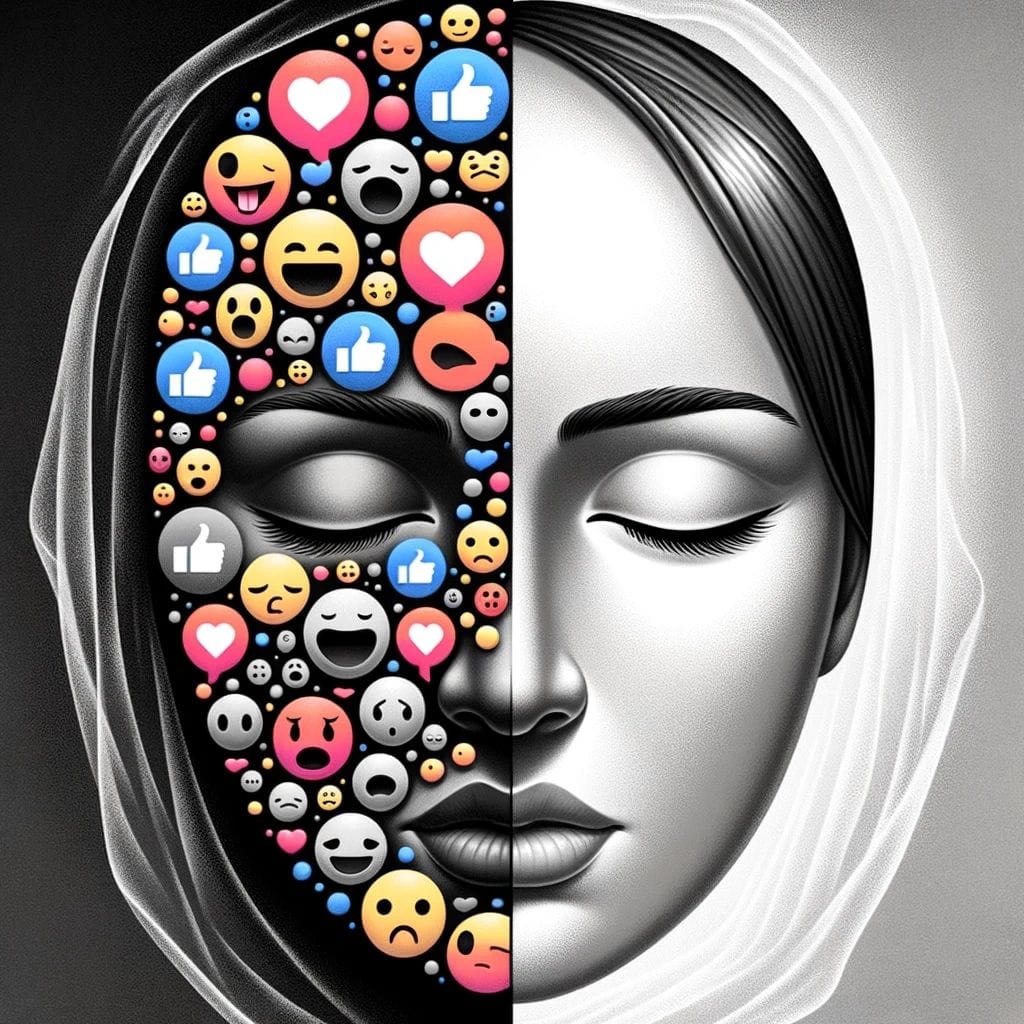
In today's hyper-connected world, it's nearly impossible to discuss human interaction without acknowledging the pervasive influence of social media. From Facebook to Instagram, Twitter to TikTok, these platforms have fundamentally altered the very fabric of how we relate to one another. Gone are the days when relationships were solely built on face-to-face interactions, handwritten letters, and voice calls that you could count and remember. Today, our connections are often initiated, nurtured, and sometimes even ended, through the screen of a smartphone or computer.
The digital realm is a double-edged sword. On one side, it brings us closer, bridging geographical gaps and facilitating communication in ways that were once the stuff of science fiction. On the flip side, this ease of connection can sometimes create an illusion of intimacy, masking the complexities and emotional depth that are essential to any meaningful relationship.
So, is social media a boon or a bane for relationships? Does it enrich our lives by providing a platform for self-expression and connection, or does it diminish the quality of our interactions, reducing them to superficial likes and emoji reactions? And amidst this digital whirlwind, where does one find the elusive "meaning" in life that philosophers and poets have pondered for centuries?
This blog post will delve into these questions through a comparative analysis. We'll explore the positive impact of social media on relationships — how it facilitates communication, nurtures shared interests, and provides a platform for public displays of affection. Contrasting this, we'll look at the darker aspects — how it can create an illusion of connection, be a ground for miscommunication and misinterpretation, and exert unrealistic pressures. Finally, we'll examine how, in this complex landscape, one can navigate toward more meaningful connections and perhaps find some semblance of life's deeper meaning.
Section 1: The Upside - Instant Connection and Shared Experiences
Facilitating Communication
In the pre-digital era, maintaining long-distance relationships was a herculean task. Letters took weeks to arrive, international phone calls were prohibitively expensive, and video calls were the stuff of futuristic fantasies. Enter social media, and the landscape has changed dramatically. Now, a quick WhatsApp message can instantly bridge the miles, a Zoom call can bring a family together across continents, and a timely Facebook post can keep friends in the loop about major life events. The significance of this instantaneity cannot be overstated.
But it's not just about ease and speed; it's about the richness of the communication as well. Features like voice notes, video clips, and even augmented reality filters add layers of expression that were previously difficult to convey remotely. In essence, social media enables a form of 'continuous partial attention,' where we can be part of each other's lives in a way that was never possible before.
Fostering Shared Interests
Have you ever felt the joy of discovering someone who shares an obscure hobby or interest with you? Before social media, the chances of crossing paths with such individuals were relatively slim. Platforms like Instagram, Pinterest, and specialized forums have changed that. Whether it's a shared love for vintage cars, vegan recipes, or indie music, social media has become a repository of shared interests. These common grounds serve as excellent conversation starters and bonding elements, elevating relationships from mere acquaintances to something much more enriching.
Public Displays of Affection
In days gone by, expressions of love and affection were often confined to private spaces or special occasions. Now, a simple Instagram post captioned "Love of my life" or a Facebook relationship status change to "Engaged" can broadcast your affections to the world. While some may argue that this publicization trivializes relationships, there's another perspective to consider. Public affirmations serve as social validations that can, in fact, reinforce the emotional bond between individuals. They also create a collective memory, a digital scrapbook of sorts, capturing moments that can be revisited and cherished.
Section 2: The Downside - The Reality Behind the Screen
The Illusion of Connection
While social media platforms tout numbers — followers, likes, shares — as indicators of social wealth, these metrics can be misleading. Having 1,000 Facebook friends or 5,000 Instagram followers may create an illusion of popularity and connection, but it often lacks depth. The 'like' button is a poor substitute for genuine emotional investment or meaningful conversation. A double tap on a picture doesn't necessarily signify a deep relationship; rather, it can serve as a shallow form of social currency that masks the lack of a substantial connection.
Miscommunication and Misinterpretation
Human interaction is a complex ballet of verbal and non-verbal cues, including tone of voice, facial expressions, and body language. These subtleties are often lost in the world of social media, where text and emojis prevail. Even with the advent of video calls and voice notes, the absence of real-time, face-to-face interaction can lead to misunderstandings. For instance, a text message saying "I'm fine" could be interpreted in multiple ways depending on the context, and the lack of accompanying non-verbal cues can lead to unnecessary emotional turmoil.
The Pressure to Be "Picture Perfect"
The culture of social media encourages a curated presentation of life, where only the most photogenic meals, the most exotic vacations, and the most romantic gestures make the cut. This constant exposure to others' "highlight reels" can lead to unrealistic expectations in relationships. When your partner's elaborate Valentine's Day surprise post floods your feed, it's easy to feel inadequate or pressured to reciprocate with an equally grand gesture. These unrealistic standards can sow seeds of discontent, dissatisfaction, and insecurity, eroding the foundations of even the strongest relationships.
Section 3: Finding Meaning Amidst the Digital Chaos
Depth Over Breadth
In the search for meaning in life and relationships, the quality of connections often holds more weight than the quantity. Accumulating hundreds or even thousands of online 'friends' or 'followers' might boost your social metrics, but it's the deeper, more intimate relationships that truly enrich our lives. These meaningful connections are often nurtured through shared experiences, in-depth conversations, and mutual emotional investment — qualities that can get lost in the superficiality of social media. Therefore, it's crucial to sift through the digital noise to find those connections that resonate on a deeper level, and then invest the time and emotional energy they deserve.
Transparency and Authenticity
In a world where filters and curated feeds have become the norm, authenticity is a rare but invaluable commodity. The irony of social media is that while it offers unlimited opportunities for self-expression, it also creates pressure to conform to certain standards or expectations. Authenticity in relationships comes from being true to yourself and being transparent with others. This means resisting the urge to create a picture-perfect digital persona and instead showing your vulnerabilities, hopes, and real self. Authenticity forms the foundation of meaningful relationships and is key to finding a deeper meaning in life.
The Role of Intentionality
The deluge of information and connections available through social media can be overwhelming. Amidst this constant stream, intentionality becomes crucial. Being intentional means making deliberate choices about who you connect with, what content you consume, and how you engage with others. This intentionality can manifest in various ways — from setting boundaries on social media usage to consciously choosing quality interactions over quantity. Being intentional in the digital realm not only enhances the quality of your relationships but also contributes to a more fulfilling and meaningful life.
Conclusion
Social media, for all its ubiquity and influence, remains a double-edged sword in the realm of human relationships. It has revolutionized the way we connect, communicate, and share experiences, offering unprecedented opportunities for building and maintaining relationships across geographical and cultural boundaries. Yet, it also presents a set of unique challenges that can undermine the quality, depth, and meaning of these very connections.
The answer to whether social media is beneficial or detrimental to relationships is not binary; it's nuanced. Its impact is malleable, shaped by individual choices, intentions, and actions. The key lies in understanding these dynamics and navigating them judiciously. By focusing on the quality of connections over the quantity, by being authentic and transparent, and by acting with intentionality, we can tip the scales towards meaningful relationships and a fulfilling life.
Further Reading
The intricacies of social media's influence on relationships are an ongoing subject of study and debate. If you're interested in delving deeper into this topic, consider exploring the following avenues:
- Psychological studies that investigate the impact of social media on interpersonal relationships and mental health.
- Sociological research that examines how digital technologies are reshaping community structures and social norms.
- Philosophical essays that ponder the existential implications of our increasingly digital lives.
- Self-help books and articles that offer practical advice on managing social media usage and fostering meaningful relationships.
Your journey towards a nuanced understanding of this complex landscape is just a click away, ready to be embarked upon with the same device that brought you here — an embodiment of the paradox that is social media.
Author’s Note
As someone who has navigated the digital landscape both personally and professionally, I've been fascinated by the profound ways in which social media impacts our lives and relationships. This blog post is the culmination of years of observation, research, and personal experience. I would like to acknowledge the contributions of various experts in the fields of psychology, sociology, and technology whose works have informed this analysis. While every effort has been made to present a balanced and nuanced perspective, readers are encouraged to use this as a starting point for their own exploration.
References
- Turkle, S. (2011), "Alone Together: Why We Expect More from Technology and Less from Each Other", Basic Books.
- Goffman, E. (1956), "The Presentation of Self in Everyday Life", University of Edinburgh Social Sciences Research Centre.
- Baumeister, R. F., & Leary, M. R. (1995), "The Need to Belong: Desire for Interpersonal Attachments as a Fundamental Human Motivation", Psychological Bulletin, 117(3), 497–529.
- Putnam, R. (2000), "Bowling Alone: The Collapse and Revival of American Community", Simon & Schuster.
Online Resources
- "The Psychology of Social Media: Why We Like, Comment, and Share Online", Psychology Today. Link
- "Social Media: How much is too much? ", BBC Future. Link
- "Screen Time and the Brain", Harvard Medical School. Link
- "The Effects of Social Media on Relationships", TEDx Talks. Link
- "Social Media is Making Us Unsocial", TEDx Talks. Link
The influence of social media on relationships has been a topic of discussion in several podcast episodes by Lex Fridman and Joe Rogan, either independently or collaboratively. Below are some of the podcast episodes where this theme was discussed in varying depths:
Lex Fridman's Podcast:
- Episode #393 with Andrew Huberman: This episode delves into topics surrounding relationships, drama, betrayal, sex, and love. Podcast
- Episode #291 with Jonathan Haidt: The episode titled "The Case Against Social Media" explores various aspects of social media including its impact on mental health and democracy, which may indirectly relate to relationships. Podcast
- Episode #396 with James Sexton: Although primarily focused on marriage and divorce, this episode could provide insights into how social media may play a role in modern relationships. Podcast
Joe Rogan's Podcast:
- MMA Show #147 with Sean O'Malley & Coach Tim Welch: A segment of this episode is titled "The Impact of Social Media on Marriage" which suggests a focused discussion on the subject matter. Podcast
- Episode with Kevin Hart: In this episode, Joe Rogan and Kevin Hart discuss a range of topics including their issues with social media, which may provide insights into its influence on relationships. Podcast
Each episode provides a unique lens through which the complex interplay between social media and relationships is explored. The discussions are likely to cover a broad spectrum of experiences and perspectives, illuminating the multifaceted impact of social media on personal and interpersonal dynamics.