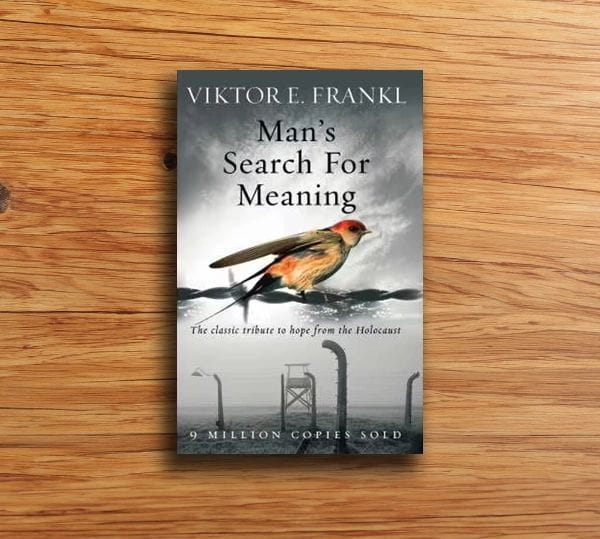
Have you ever stood at the crossroads of life, pondering the direction to a life brimming with purpose and meaning? Viktor E. Frankl's seminal work, "Man's Search for Meaning", provided me with a beacon of hope and understanding as I embarked on the ambitious endeavor of penning "Meaningfulness". Through the lens of Frankl's harrowing experiences and profound insights, I sought to explore the diverse tapestry of what constitutes a meaningful existence.
The context of Frankl's masterpiece, set against the grim backdrop of Nazi concentration camps, might seem a world away from the thematic exploration of my book. However, it was within the depths of human suffering that Frankl unearthed universal truths about the human condition — truths that resonated deeply with me and became the bedrock upon which "Meaningfulness" was constructed.
My overall impression of Frankl's contribution is one of awe and reverence. His ability to distill wisdom from despair, to find a steadfast purpose amid chaos, and to assert the indomitable will to meaning in the face of utter dehumanization, has profoundly impacted my understanding of meaningfulness. It has shaped my conviction that our search for meaning is not just a psychological quest, but a fundamental aspect of the human experience.
In the upcoming sections, I will delve deeper into how Frankl's logotherapeutic journey inspired the themes of "Meaningfulness", the critical analysis of his arguments, and the indelible personal and professional influence his work has had on mine.
Author's Background: Viktor E. Frankl and the Birth of Logotherapy
Viktor E. Frankl, an Austrian neurologist and psychiatrist, survived the Holocaust — an experience that shaped not only his worldview but also the development of his psychological theory, logotherapy. His profound understanding of human psychology, drawn from the crucible of his lived experience, imbued him with an authoritative voice on the subject of life's meaning. It is this profound authority that lends "Man's Search for Meaning" its enduring impact and what made it an indispensable reference as I wrote "Meaningfulness".
Frankl's previous works, including his prolific psychological contributions and his founding of the Third Viennese School of Psychotherapy, also influenced the conceptual underpinning of "Meaningfulness". His dedication to understanding the human psyche, particularly the concept of existential analysis, resonates through my exploration of what it means to lead a life of significance.
In my journey through the pages of "Meaningfulness", I sought to mirror Frankl's deep reverence for the human capacity to find meaning under all circumstances. His life's work, a testament to resilience and hope, became a cornerstone for my own exploration into the nature of a fulfilling life. The relevance of his teachings is timeless, and their application is as pertinent today as it was in the aftermath of World War II.
Frankl’s qualifications extend beyond his academic credentials; they are etched into the very essence of his narrative, which has become a guiding light for those seeking to understand the essence of meaningful living. As I reflected on the principles set forth by Frankl, I found them indispensable in crafting a narrative that aimed not only to inform but also to transform the reader’s perspective on meaningfulness.
Let’s now provide a summary of the content that encapsulates the core messages of "Man's Search for Meaning" and how it seamlessly integrates with the themes of "Meaningfulness".
Summary of Content: The Symbiosis of 'Man's Search for Meaning' and 'Meaningfulness'
In "Man's Search for Meaning", Viktor E. Frankl presents a dual-structured narrative, weaving his existential analysis of life in concentration camps with the foundational tenets of logotherapy. The book oscillates between harrowing first-person accounts and insightful psychological observations, forming a rich tapestry of human resilience and the quest for meaning. Its structure, a blend of memoir and scholarly exposition, underscores Frankl's central thesis: life holds potential meaning under all circumstances.
As I embarked on the writing of "Meaningfulness", this thesis became a guiding framework. My book, while broader in scope, is a collection of essays and reflections that dissect the multifaceted nature of a meaningful life. It traverses a variety of themes — from the impact of cognitive biases on our perception of reality to the subjective nature of good and bad, and from the intricate dance of societal influences to the philosophical ponderings on life's grand questions.
The organization of "Meaningfulness" is deliberately designed to echo the layered complexity of "Man's Search for Meaning". Each chapter builds upon the last, culminating in a comprehensive exploration that not only provides insight but also encourages readers to actively participate in the creation of their own meaningful narrative.
Frankl's work, with its potent blend of personal narrative and psychological insight, offered an invaluable model for my own. The balance he achieved between the recounting of his experiences and the distillation of logotherapeutic principles informed the structure of "Meaningfulness", guiding readers through an introspective journey that seeks to illuminate and challenge their understanding of what it means to live purposefully.
Critical Analysis: The Depth of Frankl's Insights and Their Resonance in 'Meaningfulness'
In dissecting the arguments put forth by Viktor E. Frankl, one is struck by the profound simplicity and depth of his insights. His assertion that the search for meaning is the central human motivational force is not merely a postulation; it is an observation steeped in the grim reality of survival under the most dire circumstances. Frankl's arguments, presented with the weight of experience and scholarly reflection, offer a robust framework for understanding human behavior and resilience.
In "Meaningfulness", I have taken great care to critically evaluate these arguments, not only in their historical context but also in their application to contemporary life. Frankl's use of anecdotal evidence, personal experiences, and psychological principles provided a strong foundation for his claims, which I have examined through the lens of modern psychological research and personal observation.
The evidence Frankl presented, particularly the correlation he identified between a sense of meaning and the will to live, resonates throughout my work. In "Meaningfulness", I build upon this evidence, incorporating recent studies and theories that reinforce Frankl's thesis and expand upon it, exploring how the search for meaning operates across various domains of life — from personal development to societal contribution.
Furthermore, Frankl's contribution to the field of psychology — and to the broader conversation about meaningfulness — is unparalleled. His logotherapeutic approach has not only influenced therapeutic practices but has also permeated cultural and philosophical domains. In "Meaningfulness," I acknowledge this contribution by aligning my exploration with logotherapy’s principles, seeking to apply its core messages to the pursuit of a life well-lived in our modern world.
As I reflect upon the personal impact of "Man's Search for Meaning", I will now dig deeper into how Frankl's exploration of life’s gravest trials has shaped my perception of meaningfulness and informed the anecdotes and applications that breathe life into my book.
Personal Reflection: The Resonance of Frankl's Wisdom in My Life and Writing
Viktor E. Frankl's "Man's Search for Meaning" has been a beacon in my quest to comprehend and convey the essence of a meaningful life. His indomitable spirit and unyielding pursuit of purpose amidst the horrors of the Holocaust have profoundly influenced my perception of meaningfulness. It's a book that has not only informed my intellectual understanding but has also touched the very core of my personal ethos.
In writing "Meaningfulness", I found myself reflecting on Frankl’s experiences and insights as a source of personal enlightenment. I was particularly moved by his conviction that we can choose our attitude in any given set of circumstances. This principle became a recurring theme in my book, as I sought to illustrate the power of personal choice and the impact it has on leading a meaningful life.
The anecdotes I share in "Meaningfulness" are deeply colored by the hues of logotherapy. Frankl's emphasis on finding meaning through suffering, work, and relationships has guided the narratives I chose to share. These stories, drawn from both my life and the lives of those I've encountered, serve as testaments to the enduring relevance of Frankl's message.
Moreover, the application of Frankl's teachings extends beyond the personal and into the realm of the practical. In my book, I discuss how the insights from "Man's Search for Meaning" can be applied to everyday scenarios, from overcoming personal challenges to contributing to societal progress. The universality of Frankl's logotherapy is showcased through its adaptability to various life situations, underscoring its transformative potential.
I will now present a comparative analysis that places "Man's Search for Meaning" alongside other influential works on meaningfulness, highlighting the unique perspectives Frankl offers and how these have enriched my own writing.
Comparative Analysis: Dialogues with 'Man's Search for Meaning' in the Landscape of Literature on Purpose
When positioning "Man's Search for Meaning" within the wider discourse on life's purpose, it becomes apparent how Viktor E. Frankl’s work stands as a monumental pillar in this field. This book interacts with a plethora of other influential works on meaningfulness, from the existential musings of Kierkegaard and Sartre to the psychological inquiries of Maslow and Rogers. However, Frankl's perspective is distinguished by its raw empiricism — born out of the crucible of suffering — and its unwavering optimism in the potential for human growth.
In "Meaningfulness", I engage in a dialogue with Frankl's principles, juxtaposing them with contemporary theories and narratives. My aim was not to replicate his insights but to extend the conversation into new realms of thought and application. For example, while Frankl discussed the idea of meaning being found in work, love, and suffering, I explore how modern societal constructs and technological advancements have influenced our pursuit of purpose.
Frankl's unique perspective — that meaning can be discovered even in the depths of despair — challenges the sometimes more abstract explorations of existential philosophers. It also adds a pragmatic dimension to the often idealistic views of humanistic psychology. This blend of practicality and depth provides a rich soil from which "Meaningfulness" grows, offering readers not just a philosophical treatise but also a guide to action.
The contrasts and confirmations found when comparing "Man's Search for Meaning" with other works serve to underscore its uniqueness. Frankl’s message is timeless yet timely, universal yet personal, and it was these qualities that I endeavored to weave into the narrative of "Meaningfulness", providing a contemporary exploration of our timeless search for significance.
Strengths and Weaknesses: A Balanced View of 'Man's Search for Meaning'
The strengths of Viktor E. Frankl's "Man's Search for Meaning" are manifold. Frankl's ability to distill profound psychological truths from his experiences in concentration camps offers an authenticity that is both riveting and enlightening. The vividness of his narrative provides a powerful emotional resonance, while his psychological insights afford a robust intellectual framework for understanding the pursuit of meaning. His writing has an undeniable clarity and precision that cut to the heart of the human experience.
In "Meaningfulness", I sought to honor these strengths by anchoring my discussions in the real world, ensuring that theory always met practice. Frankl’s existential and logotherapeutic framework provided a solid foundation upon which I built my exploration of how we, as individuals and as a society, can live more purposefully.
However, no work is without its limitations. "Man's Search for Meaning", for all its depth, is inevitably a product of its time and Frankl's personal experiences. Some critics argue that it may not fully address the varying cultural and individual contexts in which people search for meaning today.
In writing "Meaningfulness", I aimed to build on Frankl's foundational work by incorporating diverse perspectives and contemporary issues. While Frankl’s narrative is steeped in the atrocities of the Holocaust, my book extends the conversation into the nuances of modern life, examining how the digital age, cultural shifts, and global challenges shape our search for meaning.
While "Man's Search for Meaning" remains a seminal work, it is through its dialogue with contemporary thought and challenges that its insights continue to evolve. My book "Meaningfulness" is both a homage to and a continuation of Frankl's exploration, seeking to adapt and apply its wisdom to the complexities of 21st-century living.
Conclusion: Synthesizing Wisdom for the Search for Meaning
As I conclude my reflections on Viktor E. Frankl's "Man's Search for Meaning" and its profound influence on my work, "Meaningfulness", I find myself humbled by the enduring relevance of Frankl’s insights. The synergy between these two works is a testament to the timeless quest for meaning that defines the human condition.
Frankl’s work is more than just a memoir of survival; it is a beacon that continues to guide us through the complexities of modern existence. His legacy is captured in the way we, as a society and as individuals, approach the challenges of finding purpose in the face of adversity. The strength of his message lies in its universal applicability, its capacity to transcend the personal and resonate on a collective level.
In crafting "Meaningfulness", I have endeavored to channel the essence of Frankl’s wisdom into a contemporary context. My book is an invitation to readers to engage in a deep and meaningful conversation about how we construct the narratives of our lives. It is an exploration of how we can navigate the myriad choices and challenges that define our existence with grace, purpose, and intention.
Both "Man's Search for Meaning" and "Meaningfulness" serve as companions on the journey to understand life’s complexities. They are dialogues in the great conversation about what it means to live authentically and purposefully. It is my hope that readers find in "Meaningfulness" a resource that complements Frankl’s foundational work, offering new pathways and fresh perspectives on the enduring search for life’s meaning.
As I reflect on the impact of "Man's Search for Meaning", I am reminded that our search for purpose is not a solitary endeavor but a shared journey. It is a voyage that connects us, challenges us, and ultimately, unites us in our common humanity. May we all continue to find meaning in every moment of our existence and may the wisdom of our collective explorations enlighten our paths.
References:
- Frankl, V. E. (1946), "Man's Search for Meaning", Beacon Press.
- Djeff Bee (Publication pending), "Meaningfulness: Discovering Purpose and Fulfillment in a World of Chaos": https://meaningfulness.com.au/book
Disclaimer: The Uniqueness of Perspective
Please note that the thoughts and analyses presented in this review and its influence on my own work are rooted in my personal interpretation and intellectual journey. They are offered as one perspective among many in the vast landscape of discourse on life's purpose and meaning.
I fully embrace that the richness of any literary work lies in its ability to spawn a multitude of viewpoints, each reflecting the unique experiences and philosophies of its reader. As such, while I have shared my insights with candor and conviction, I acknowledge and celebrate the diversity of thought that characterizes our collective search for understanding.
You, as the reader, may find different resonances and draw distinct conclusions from Frankl’s work, and I encourage you to voice your own opinions, whether they align with mine or diverge. The beauty of engaging with profound texts lies in the conversation they incite and the multiplicity of meanings they reveal to each individual.
In the spirit of intellectual exploration and growth, I invite you to approach both "Man's Search for Meaning" and "Meaningfulness" with an open mind and a reflective heart, and to freely form and express your own interpretations.