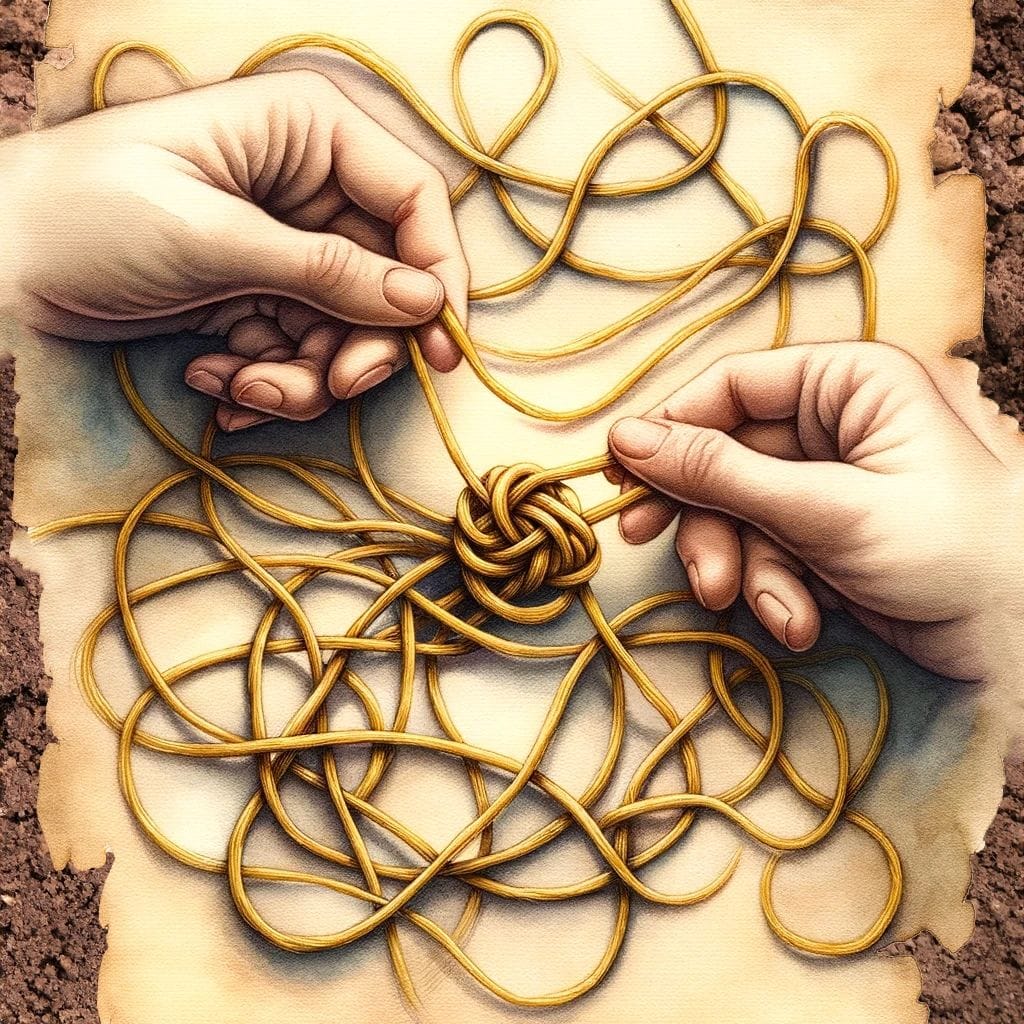
Have you ever felt a twinge of dread as your partner's voice elevates, signaling the beginning of yet another disagreement? Perhaps you've found yourself staring into space, contemplating how a simple discussion morphed into an emotional battlefield. If you're nodding along, you're in good company. Conflict is an inescapable element of any human relationship, often leaving a trail of emotional exhaustion in its wake. But what if these very moments of discord, generally perceived as harmful, could be gateways to greater life satisfaction and meaning? Intrigued? Join me as we venture into the complex world of relationship conflicts and unearth the potential they hold for enriching not just our love lives, but our existential journeys as well.
Setting the Scene: Sarah and John
Sarah and John's relationship was the envy of their social circle. On the surface, they were the perfect match — both attractive, intelligent, and charismatic. They enjoyed weekend getaways, shared a love for indie music, and even finished each other's sentences. Instagram portrayed a couple in harmony, capturing smiles across dinner tables and hands held against sunset backdrops.
But behind closed doors, a different narrative unfolded. Tensions simmered and, at times, erupted. Conversations that began as constructive discussions degenerated into verbal clashes. Each argument left an emotional residue, accumulating into a cloud of doubt that hovered over them. Their seemingly idyllic relationship was not immune to the challenges that love brings; it was a battleground where differing values, expectations, and dreams collided.
The Root of Conflict
The fissures in Sarah and John's relationship were not born out of malice or indifference but sprang from a well of diverging life philosophies. Sarah, a high-achieving corporate lawyer, placed immense value on career advancement and financial stability. Her life was a meticulously planned series of milestones — each promotion, each accolade a testament to her diligence. She envisioned a future replete with material comforts, a solid retirement plan, and a social status befitting her efforts.
John, a graphic designer with a flair for artistic expression, had a different outlook. For him, life was an unfolding tapestry of experiences to be savored rather than a ladder to be climbed. He dreamed of backpacking across Europe, volunteering in remote communities, and collecting stories that couldn't be contained within the four walls of an office.
These individual paradigms were not merely preferences; they were deeply ingrained values that shaped their identities. When these worlds converged, conflict was not just likely; it was inevitable. Discussions about future plans became ideological battlegrounds. Sarah's desire for a luxurious vacation clashed with John's yearning for a charitable mission trip. Arguments over investment plans and career moves were not just logistical debates but contests between two contrasting views on what constituted a fulfilling life.
The Wake-Up Call
The turning point arrived on a chilly winter evening. The disagreement of the day revolved around a particularly sensitive issue: whether to prioritize buying a house or to travel the world. Voices escalated, and a cacophony of accusations and defenses filled the air. It was in this heightened emotional state that Sarah experienced a moment of clarity, akin to a mental fog lifting. She paused and looked at John, not as an opponent but as the person she loved, and something clicked.
It dawned on her that their recurring conflicts were not barriers to be overcome but signposts beckoning them toward a more nuanced understanding of each other — and of life itself. It was as if the disagreements were coded messages, urging them to confront the uncomfortable yet transformative power of vulnerability, compromise, and change.
Suddenly, their arguments appeared less like obstacles and more like opportunities — chances to delve deeper into their individual psyches, to question established beliefs, and to build a relationship that was not an echo chamber but a school of emotional and intellectual growth. With this newfound perspective, Sarah and John knew they had reached a pivotal juncture; they could either allow their conflicts to divide them or harness them as tools for mutual evolution. They chose the latter.
Turning Point: The Strategies
Embracing this epiphany, Sarah and John committed to a new approach toward their conflicts, treating them as collaborative challenges rather than adversarial confrontations. They implemented several key strategies to navigate their disagreements with greater maturity and effectiveness.
1. Open Communication: Gone were the days of passive-aggressive comments and suppressed grievances. Sarah and John instituted a policy of open dialogue, where both felt empowered to express their thoughts and feelings without fear of judgment. This transformed their conversations from minefields to safe spaces for authentic interaction.
2. Active Listening: Instead of using the other's speaking time to formulate their next point, they each committed to truly hearing the other out. This simple yet profound shift facilitated a deeper understanding of each other's perspectives. It wasn't about agreeing all the time; it was about giving each other's viewpoints the respect and consideration they deserved.
3. Finding Common Ground: Despite their differing values, Sarah and John recognized that at the core of their relationship was a shared commitment to love and mutual growth. They began to identify these intersections of agreement as common ground upon which compromises could be built. Whether it was merging financial priorities or blending vacation plans to include elements of luxury and adventure, they found ways to honor both sets of values.
4. Self-Reflection: Apart from understanding each other, they also took time to introspect, questioning why certain issues triggered such strong reactions in them. This self-examination often led to revelations about their own insecurities and unspoken expectations, offering yet another layer of complexity and depth to their relationship.
5. Time-Outs: Recognizing that not all conflicts could be resolved in the heat of the moment, they agreed upon a 'time-out' signal. This gave them the permission and space to step back, cool down, and return to the issue with a refreshed mindset.
6. Emotional Intelligence: Both made a concerted effort to understand not just what they were arguing about but also why they were arguing. Was it truly about the issue at hand, or were there underlying emotional needs that were being ignored? This elevated their conflicts from petty disputes to meaningful discussions about emotional well-being.
7. Apologies and Affirmations: Last but not least, they learned the art of a genuine apology and the power of affirmation. Acknowledging mistakes and appreciating each other’s strengths acted like a healing balm on their emotional wounds, reinforcing their bond even in the aftermath of a conflict.
The Transformation
As Sarah and John began to implement these strategies, they noticed a palpable shift not just in the frequency and intensity of their conflicts, but also in the quality of their relationship as a whole. The atmosphere between them changed; it was as though they had replaced a taut, fraying rope with a resilient, elastic band that could withstand tension without snapping.
Their arguments, though still present, became constructive platforms for growth. Sarah's meticulous planning found a counterbalance in John's spontaneity, turning their life together into a well-rounded adventure. John's creative pursuits were enriched by Sarah's grounded perspective, adding a layer of pragmatism to his artistic dreams.
More importantly, they discovered a newfound sense of intimacy, one that was nurtured not in the absence of conflict but in its very midst. By facing their issues head-on, they had ventured into the vulnerable territories of their personalities, fears, and desires. This courageous exploration paved the way for a deeper emotional connection, cementing their commitment to each other.
The conflicts had not only tested their relationship but had also fortified it, much like a sword tempered in fire. The resilience they gained was not just the avoidance of breakup but an elevation of their relationship to a realm of higher emotional intelligence, empathy, and mutual respect.
They found joy in the little things — John cherishing the financial security that Sarah's planning provided, and Sarah finding liberation in the spontaneous weekend getaways that John orchestrated. It was as if they had each gained a new lens through which to view the world, broadening their horizons while deepening their appreciation for each other.
The Epiphany: Finding Meaning Through Conflict
As they navigated this transformative journey, Sarah and John stumbled upon an even more profound realization. Their conflicts were not isolated incidents confined to their relationship; they were microcosms of the broader human struggle for understanding, identity, and fulfillment. Each argument, each resolution, was a stepping stone on their paths to becoming better individuals and, by extension, better partners.
Sarah and John found that their improved conflict management skills transcended their relationship and permeated other areas of their lives. They became better communicators at work, more empathetic friends, and more patient individuals. They realized that the qualities they were cultivating — open-mindedness, adaptability, emotional intelligence — were invaluable life skills that elevated their experiences in every social, professional, and personal arena.
Their conflicts became lessons in humility, teaching them that they didn't have all the answers. They learned the beauty of compromise, the strength in admitting wrongs, and the wisdom in embracing different viewpoints. These skills endowed them with a richer, more nuanced understanding of life, contributing to a heightened sense of meaning and purpose.
In this sense, their conflicts served as a conduit for personal growth and existential enrichment. They were no longer mere disagreements to be weathered but invaluable life experiences that deepened their understanding of the complexities of human emotions, aspirations, and interactions. Through the crucible of conflict, they unearthed not just a stronger relationship but also a more meaningful existence.
Conclusion
The moral of Sarah and John's journey isn't that conflict is to be sought or celebrated for its own sake. Rather, it's the perspective that conflicts — often seen as threats to relationship stability — are untapped opportunities for personal and mutual growth. When approached with openness, emotional intelligence, and a willingness to engage constructively, conflicts can act as catalysts that propel us into deeper levels of understanding, both of ourselves and of the people we share our lives with.
So the next time you find yourself in a heated disagreement with your partner, take a moment to remember Sarah and John. Consider the possibility that you're not just arguing about a specific issue but navigating a complex emotional landscape filled with opportunities for growth, enrichment, and deeper connection. Instead of viewing conflict as a detour on the road to happiness, see it as a scenic route filled with landmarks of personal insight, signposts of mutual understanding, and vistas of a more meaningful life.
Through this lens, conflicts become not just inevitable aspects of relationships, but invaluable components of a fulfilling and meaningful life. It is this paradigm shift, from viewing conflicts as setbacks to embracing them as stepping stones, that holds the secret to not just surviving in a relationship, but thriving in it — finding greater purpose, richer experiences, and deeper love in the beautiful mess that is human interaction.
Author's Note
The characters of Sarah and John are entirely fictional, created to illustrate the complexities and opportunities presented by conflicts in relationships. While their story may resonate with many, it is important to note that every relationship is unique, and what works for one couple may not be suitable for another. The strategies and insights discussed in this blog post are based on general principles of interpersonal communication and emotional intelligence, and are intended to serve as a guide rather than a prescriptive solution.
References
- Gottman, J.M. & Silver, N. (1999), "The Seven Principles for Making Marriage Work", Harmony.
- Tannen, D. (2001), "You Just Don't Understand: Women and Men in Conversation", William Morrow Paperbacks.
- Chapman, G. (2015), "The Five Love Languages: How to Express Heartfelt Commitment to Your Mate", Northfield Publishing.
Online Resources
- "What Did I Do Wrong? Understanding Relationship Betrayal" - ScienceOfRelationships.com
- "A Guide to Resolving Conflicts in Romantic Relationships" - PsychologyToday.com