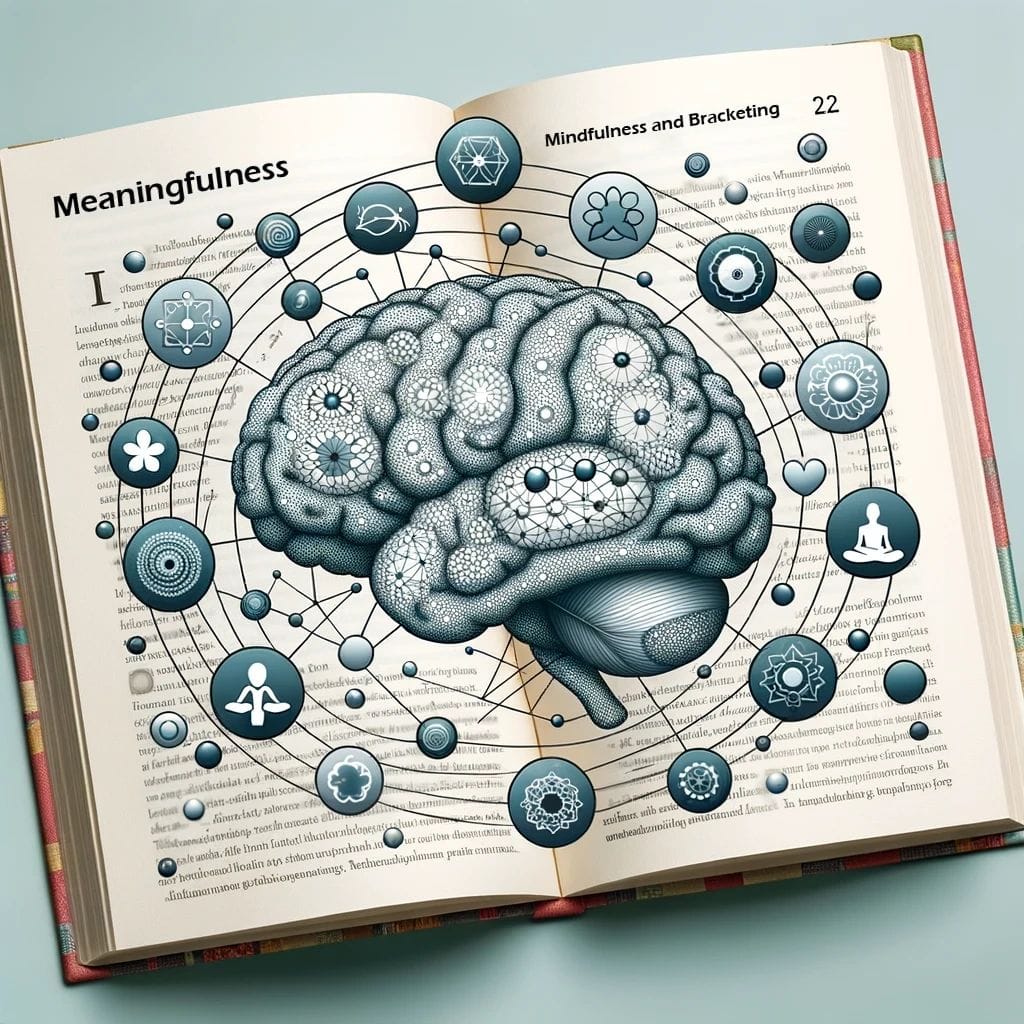
In our incessant quest for happiness and purpose, one term frequently reverberates through the corridors of psychological literature and self-help books: mindfulness. This blog post aims to unravel the complex tapestry of mindfulness, asking a critical question: "Is mindfulness the key to a fulfilled life?" Drawing from Chapter 22 of the book "Meaningfulness," which offers an illuminating discussion on mindfulness and bracketing, this post embarks on an exploratory journey into the heart of mindfulness and its transformative potential.
We live in a world teeming with distractions, stress, and unrelenting demands. Amidst this whirlpool of external stimuli, finding inner peace and fulfillment becomes a herculean task. So, how can mindfulness serve as a beacon in this tumultuous sea of modern existence?
This post will dissect the intricacies of mindfulness and its allied concept of bracketing. We will delve into practical applications, potential benefits, and the scientific basis of these practices, all aimed at unraveling their efficacy in leading a fulfilling life.
Context
The concept of mindfulness traces its roots back to ancient philosophies, most notably, Buddhist teachings. Over time, it has transcended its religious origins to become a universal practice, resonating with individuals from diverse walks of life. Mindfulness is more than a buzzword in the realms of psychology and wellness; it is an intricate practice that encourages living in the moment and appreciating life as it unfolds. It fosters a heightened state of awareness and acceptance, qualities that are increasingly vital in our fast-paced, digitally-charged world.
One could argue that the modern world, with its ceaseless demands and distractions, has created an environment where mindfulness is not just beneficial but essential. The proliferation of smartphones, social media, and the constant onslaught of information have led to an epidemic of mental clutter. This mental noise makes it increasingly difficult to focus, make rational decisions, and, most importantly, find peace within oneself. Therefore, the need for mindfulness—and related practices like bracketing—is not merely a luxury but a pressing requirement for mental and physical well-being.
What is Mindfulness?
Mindfulness is a multifaceted concept that, at its core, encourages living in the moment. The practice urges us to disengage from our habitual, automatic reactions and consciously focus on the present. By doing so, mindfulness fosters a heightened state of awareness, allowing us to observe our thoughts, feelings, and sensations without judgment.
In a dynamically evolving society characterized by constant stimuli and stressors, mindfulness serves as a grounding force. It enables individuals to navigate the labyrinthine corridors of daily life with grace and equilibrium. Through mindfulness, we cultivate an environment that nurtures mental and physical well-being, equipping us with the tools to craft a life imbued with peace, purpose, and connection.
What is Bracketing?
The practice of bracketing may be less commonly known, but it is no less significant in the quest for a fulfilling life. Bracketing involves temporarily setting aside one's personal biases, judgments, and prejudices in an effort to gain a more objective and impartial understanding of a situation or individual.
Like mindfulness, bracketing offers an avenue for enhancing self-awareness and emotional intelligence. The practice allows for a deeper engagement with our social environment by encouraging us to approach situations with an open, unbiased perspective. In doing so, bracketing enables us to navigate complex social landscapes, fostering more meaningful interactions and relationships.
The Harmony of Mindfulness and Bracketing
At first glance, mindfulness and bracketing may seem like separate concepts, each with its unique purpose. Yet, a closer look reveals a deep intersection where these practices meet, driven by a shared goal: nurturing a balanced mental state that empowers individuals to truly thrive in life. In this exploration, we venture into the intricate relationship between mindfulness and bracketing, uncovering how they harmoniously collaborate to provide profound insights into the human psyche.
Mindfulness, often described as the art of embracing the present moment, lays the essential groundwork upon which bracketing can flourish. It serves as fertile soil where the seeds of self-awareness are sown. Through mindfulness, we become finely attuned to the complex tapestry of our thoughts, emotions, and sensations, cultivating an environment conducive to personal growth. Think of it as tending to a garden, where we carefully observe the weeds (our biases and preconceptions) that threaten to overshadow the blossoms of clarity and understanding.
In the realm of bracketing, this heightened self-awareness becomes a vital catalyst. Bracketing, at its core, invites us to temporarily set aside judgments, biases, and preconceived notions, allowing us to perceive experiences with fresh, unfiltered eyes. However, it's through mindfulness that we gain the ability to recognize these biases in the first place. By acknowledging our inherent predispositions and conditioned responses, we become equipped to gently set them aside, making room for a more objective and impartial perspective.
Imagine it as an artful dance: mindfulness leads with the rhythm of self-awareness, while bracketing follows with the grace of non-judgment. Together, they create a harmonious choreography that enables us to navigate the intricate landscape of our inner world with finesse. It's a journey that transcends the ordinary, offering profound insights into the motivations behind our actions and the triggers of our reactions.
As we delve deeper into the confluence of mindfulness and bracketing, we discover a comprehensive toolbox for personal development. This synergy empowers us to lead a life enriched with serenity, purpose, and profound connections. Through the union of mindfulness and bracketing, we embark on a transformative voyage, illuminating the hidden corners of our minds and forging a path toward self-realization and genuine flourishing.
Exercises and Reflections
Exercise 1: Mindfulness Meditation
Take a few minutes each day to engage in mindfulness meditation:
- Find a quiet space, sit comfortably, and focus on your breath.
- Allow your thoughts to come and go without judgment.
- As you become more adept, extend the duration of your meditation sessions.
This simple yet powerful practice can serve as the cornerstone of your mindfulness journey.
Exercise 2: Bracketing in Social Interactions
The next time you find yourself in a challenging social interaction, employ the practice of bracketing:
- Before responding to a comment or making a judgment, take a moment to set aside your preconceived notions and biases.
- Approach the situation with an open mind and listen actively.
You may find that bracketing enriches your social experiences, leading to more meaningful conversations and relationships.
Reflection: Self-Assessment
After a week of practicing mindfulness and bracketing, take some time to reflect on your experiences:
- Have you noticed a change in your stress levels?
- Do you find it easier to focus?
- Has your quality of social interactions improved?
Use this reflection as a barometer for your progress and as motivation to continue your practices.
Summary
The practices of mindfulness and bracketing offer promising avenues for achieving a life of fulfillment and meaning. Individually, each practice provides a set of tools for enhancing self-awareness, emotional intelligence, and overall well-being. When combined, they offer a comprehensive approach to personal development that addresses both internal and external dimensions of our experiences.
As we continue to navigate the complexities and uncertainties of modern life, mindfulness and bracketing emerge not merely as coping mechanisms but as invaluable tools for personal growth and self-discovery. By embracing these practices, we open the doors to a more balanced, fulfilling, and meaningful existence.
References
- Kabat-Zinn, J. (1994), "Wherever You Go, There You Are: Mindfulness Meditation in Everyday Life", Hyperion.
- Chödrön, P. (1997), "When Things Fall Apart: Heart Advice for Difficult Times", Shambhala Publications.
- Thích Nhất Hạnh (1975), "The Miracle of Mindfulness: An Introduction to the Practice of Meditation", Beacon Press.
- Peck, M. S. (1978), "The Road Less Traveled: A New Psychology of Love, Traditional Values, and Spiritual Growth", Simon & Schuster.
- Tolle, E. (1997), "The Power of Now: A Guide to Spiritual Enlightenment", New World Library.
- Brown, K. W., & Ryan, R. M. (2003), "The Benefits of Being Present: Mindfulness and Its Role in Psychological Well-being", Journal of Personality and Social Psychology, 84(4), 822–848.
- Peck, M. Scott (1983), "People of the Lie: The Hope for Healing Human Evil", Simon & Schuster.
The Reference section aims to provide a curated list of books, articles, and studies that offer additional insights into the practices of mindfulness and bracketing, with a special mention of M. Scott Peck for his contributions to the understanding of bracketing.
Online Resources
While the subject of mindfulness is expansive and cannot be fully encapsulated in a single post, there are numerous books, academic articles, and online resources that offer unique insights and perspectives. From scientific studies that delve into the neurological basis of mindfulness to self-help books that offer practical exercises, the body of literature on this subject is both vast and enlightening. For those who wish to explore this subject in greater depth, a wealth of online resources awaits your exploration.
- Mindful Staff (2023), "Mindfulness Meditation: How to Do It", Mindful.org. Article
- Harris, S. (2023), "Sam Harris on Stoicism and Mindfulness Practice", The Daily Stoic. Podcast
- Kabat-Zinn, J. (2010), "The Science of Mindfulness", Greater Good Magazine. Article
- Margareth, A. (2019), "The Art of Mindfulness", TEDx Talk. Video
In closing, the references and online resources listed in this article offer a curated gateway into the expansive world of mindfulness and its associated practices, such as bracketing. While I have drawn upon my own readings and explorations to compile this list, it is worth noting that this is not an exhaustive collection. The realm of mindfulness is incredibly vast, with extensive scholarly work, practical guides, and digital content contributing to its richness. I encourage you to venture beyond this curated list to explore the manifold perspectives and methodologies that abound in this fascinating field.