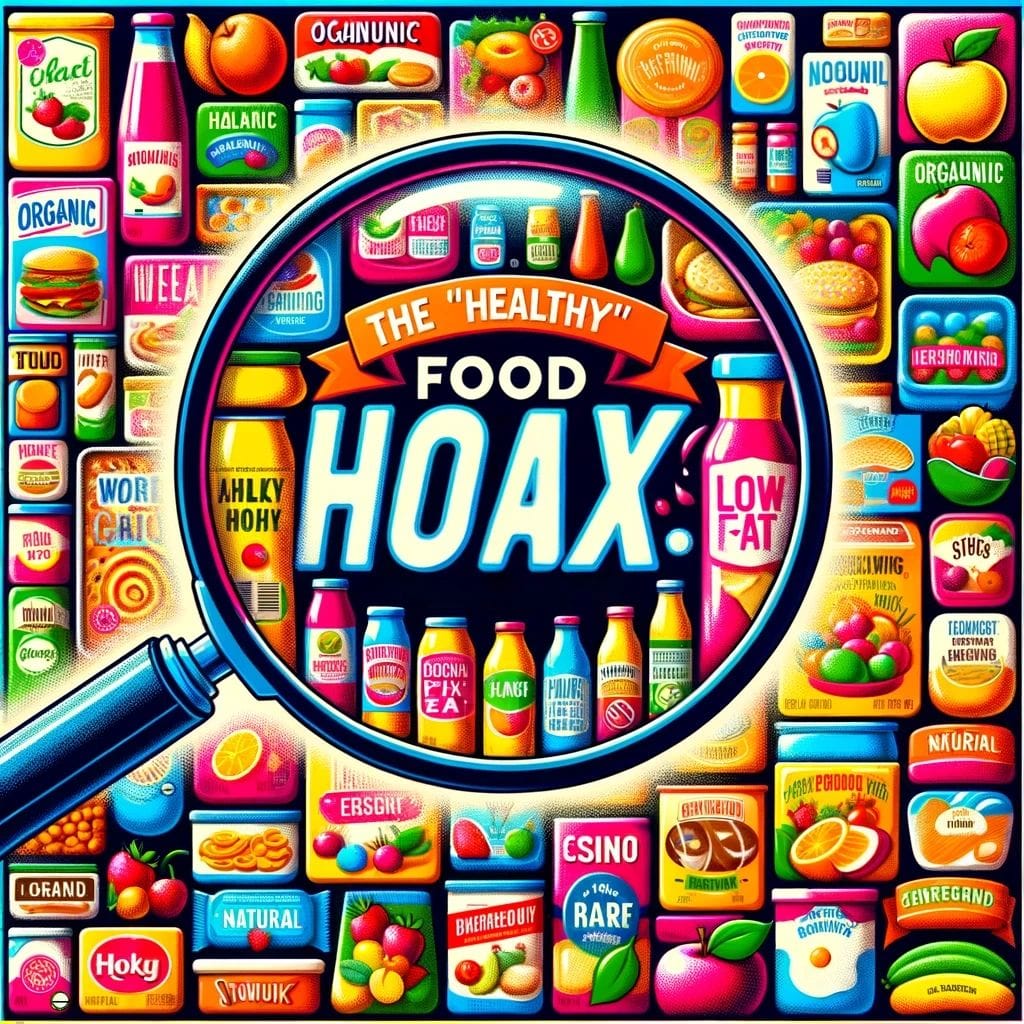
In the quest for a healthier lifestyle, many individuals turn to the supermarket aisles, browsing products that boast labels such as "low-fat", "organic", "natural", and "enriched". However, the path to optimal health is often obfuscated by misleading marketing tactics that tout the health benefits of products which may not be healthy at all. This issue, known colloquially as the 'healthy' food hoax, involves navigating a complex landscape where food labels are not always indicative of the nutritional value contained within.
The Labyrinth of Labels
Embarking on a journey to eat healthily can feel akin to navigating an elaborate maze, replete with pitfalls and deceptive turns. The aisles of our local supermarkets are lined with products that vie for our attention, parading labels that promise health benefits. Terms like "low-fat", "organic", "natural", and "enriched" can often be little more than siren songs, luring us into believing we're making wise choices, when, in reality, we might be doing the opposite.
It's a perplexing world where "low-fat" may be code for high sugar, where "enriched" could mean the food was so processed that nutrients had to be added back in artificially. The term "natural" is particularly nebulous, as it isn't rigorously defined by the Food and Drug Administration. A "natural" product may avoid artificial flavors or colors, but this doesn't preclude it from containing high fructose corn syrup or other additives that one wouldn't find in nature.
Even the coveted "organic" label, while indicating the avoidance of synthetic pesticides and fertilizers, is not a guaranteed shorthand for nutritional superiority. Studies, such as those cited by the Mayo Clinic, have shown that organic and conventional produce often have similar levels of nutrients.
The crux of the matter is that these labels are not the steadfast indicators of health that we hope for; they are malleable terms that the food industry can use to its advantage. As consumers, it's our responsibility to peel back the layers of these labels, to question and to learn what they truly represent. It's only through this critical examination that we can hope to make informed decisions that align with our health goals and not just the marketing objectives of food manufacturers.
The Health Halo Effect
When we see labels like "gluten-free", "heart-healthy", or "contains probiotics", it's easy to imagine a halo of wholesomeness surrounding the product. This phenomenon, known as the health halo effect, leads us to assign a broad spectrum of health benefits to a food item based on a single, often ambiguous, claim. What's more, this halo can blind us to the finer details, such as excessive sugar content or a long list of unpronounceable ingredients.
Consider the "gluten-free" craze: for those without celiac disease or a gluten intolerance, gluten-free products are not inherently healthier and can sometimes be worse in terms of sugar content and nutritional value, as found in a study published in The American Journal of Clinical Nutrition. Yet the health halo effect makes it tempting to assume that "gluten-free" equals "guilt-free" and, consequently, we might consume more than we should.
Similarly, snacks that are marketed as "made with real fruit" can conjure images of lush orchards and nutritious, farm-fresh produce. However, upon closer inspection, the real fruit content may be minimal, and the product could be laden with added sugars and syrups.
The health halo effect doesn't just misguide us—it can actively contribute to poor dietary choices. A product's healthful appearance could lead to overconsumption, under the misapprehension that it's good for us in large quantities. For instance, we might not think twice about drinking multiple bottles of a beverage enhanced with vitamins, overlooking the high caloric and sugar content that could be contributing to obesity and other health issues.
Awareness is the key to dispelling the health halo effect. By understanding that these claims are often designed more for selling products than improving our health, we can begin to look beyond the halo and make choices based on comprehensive nutritional information. It's a matter of changing our perceptions and recognizing that true health cannot be encapsulated by a single word or phrase on a package.
The Whole Foods Conundrum
Whole foods are often held up as the gold standard of a healthy diet. We're encouraged to shop the perimeter of the grocery store, where fresh produce, meats, and dairy typically reside. Yet, even these bastions of nutrition are not immune to the complexities of food labeling.
Organic produce, for example, has become a symbol of health and environmental consciousness. It suggests a return to simpler farming methods, devoid of synthetic pesticides and fertilizers. However, the label "organic" is a certification of process, not an indicator of the food's nutrient content. An organic apple may have been grown without conventional pesticides, but that doesn't necessarily mean it's more nutritious than its non-organic counterpart.
Similarly, the term "grass-fed" in meat products conjures up pastoral scenes of cattle grazing in open fields. While grass-fed meats can have different fat profiles and higher levels of certain nutrients like omega-3 fatty acids, as detailed in research published by the Journal of Animal Science, it's important to note that the term doesn't necessarily guarantee the animals were raised in idyllic conditions or that the product is free from other concerns such as antibiotic use.
Even the simple label of "whole grain" can be misleading. Products may be made with whole grains but still be high in added sugars or sodium, negating some of the benefits of whole grains that are documented in the Dietary Guidelines for Americans.
The conundrum lies in the fact that while whole foods are a healthier choice in general, the labels attached to them are not infallible indicators of quality. It's essential to dig deeper and understand that not all whole foods are created equal. The key is to focus on the variety and quality of whole foods, considering factors like seasonality, locality, and overall nutritional content, rather than relying solely on the presence of certain buzzwords or certifications.
Nutritional Literacy: The Antidote to Deception
In an age where misinformation can spread as fast as a trending hashtag, developing nutritional literacy is akin to donning a suit of armor against the onslaught of misleading labels and health claims. Nutritional literacy isn't just about understanding which foods are high in fiber or low in saturated fat; it's about comprehending the broader context of nutrition labels, dietary recommendations, and how individual ingredients contribute to our overall health.
To build this literacy, it's imperative to become versed in the language of food labels. This means knowing the difference between "serving size" and "portions per container," as well as recognizing that the order of ingredients on a label signifies their proportion in the product. It also entails understanding that terms like "fat-free" may signal the addition of other substances to compensate for the loss of flavor.
Nutritional literacy involves a critical analysis of what we consume, assessing foods for their macro- and micronutrient profiles. For instance, a granola bar may be rich in fiber, but if it's also loaded with sugar, its potential health benefits become questionable. It requires a balance, as emphasized by the Harvard School of Public Health, which suggests that a healthy diet includes a variety of foods with a high nutrient density, that is, a high ratio of nutrients to calories.
One of the pillars of nutritional literacy is skepticism—approaching food claims with a questioning mind. It involves researching credible sources and staying informed about nutritional science, which is continually evolving. It's about recognizing that dietary guidelines, such as those issued by the USDA, are based on the best available evidence at the time but are subject to change with new discoveries.
Ultimately, nutritional literacy empowers consumers to make informed decisions based on evidence and personal health goals, rather than being swayed by the marketing strategies of food companies. It is the antidote to deception, enabling individuals to navigate the confusing supermarket aisles with clarity and confidence.
Actionable Strategies for Consumers
In the pursuit of a diet that truly nourishes, there are concrete steps that consumers can take to cut through the noise of misleading labels and health claims.
Firstly, it is crucial to familiarize oneself with the back of the package—the nutrition facts label and the ingredients list. The front of the package is designed to sell, but the back provides the truth of what's inside. Here, you can find information on calorie count, serving size, macro- and micronutrient quantities, and the actual ingredients used.
When examining the ingredients list, aim to choose foods with whole, recognizable ingredients and fewer additives. The closer a food is to its original form, the less likely it has been altered with unnecessary fillers or preservatives.
Additionally, understanding and utilizing dietary guidelines, such as the USDA's MyPlate, can help build a balanced diet. MyPlate emphasizes the importance of filling half your plate with fruits and vegetables, and the other half with grains and protein, accompanied by a serving of dairy. This visual guide can help ensure you're getting a mix of macronutrients and micronutrients essential for health.
Another strategy is to prioritize the consumption of whole, unprocessed foods. These foods are inherently less likely to carry misleading labels because they are what they are—apples are apples, lentils are lentils. When you focus on foods that are minimally processed, you naturally avoid the pitfalls of confusing claims and labels.
When in doubt, reach out to a registered dietitian or nutritionist who can provide personalized advice based on your health goals and needs. These professionals can help decipher the complex language of nutrition labels and guide you in making choices that align with a nutritious diet.
Lastly, remember that no single food is the key to health. Rather, it's the overall pattern of your diet that matters. A single "superfood" won't compensate for an otherwise unbalanced diet, just as one "bad" food won't derail an overall healthy eating pattern.
By taking these actionable steps, consumers can empower themselves to make informed choices in the grocery store, paving the way for a nutritious diet that sustains not only the body but also the mind and spirit.
Conclusion
As we come to terms with the realities of the 'healthy' food hoax, it's evident that the responsibility for discerning the truth about our food choices falls squarely on our shoulders. The food industry's marketing strategies are designed to sell, not to educate, and thus, it is up to us as consumers to arm ourselves with knowledge and skepticism.
The journey towards a healthier lifestyle is not one we can embark on blindly. It requires diligence, curiosity, and a willingness to question the status quo. We must be willing to look beyond the attractive packaging and enticing labels to the substance that lies beneath.
We also must keep in mind two basic principles: 1) the companies behind these products are seeking profits, not trying to help you extend your lifespan; 2) labels are designed by the marketing team, to get you to buy their products, not to inform you.
Therefore, nutritional literacy is not just a tool; it's a critical skill that we must develop and hone. By understanding how to read and interpret food labels, questioning the validity of health claims, and making informed choices, we can take control of our diets and our health.
The path to better health is fraught with obstacles, but it is navigable. With each informed choice we make, we take a step forward in our quest for well-being. It's about balance, moderation, and making the best possible decisions within the complex landscape of modern nutrition.
Let's not be deceived by the illusions of health that the food industry presents us. Instead, let's commit to seeking out the truth, empowering ourselves with education, and fostering a culture of health that is based on facts, not fads. Together, we can rise above the 'healthy' food hoax and create a future where our food choices are a reflection of our knowledge, not our naivety.
Author’s Note
As someone who has navigated the winding roads of health and nutrition for my personal benefits, I understand the struggle of differentiating between genuinely nutritious choices and cleverly marketed food products. My mission in writing this blog post is to illuminate the complexities of food labeling and to empower readers with the knowledge to make healthier decisions.
I would like to extend my gratitude to the nutritionists, dietitians, and food scientists whose tireless work in research and education has provided the foundation for this discussion. Their dedication to uncovering and communicating the truths about our food system is invaluable.
I also acknowledge that the landscape of nutrition is ever-evolving, with new studies and guidelines emerging regularly. While I have endeavored to provide the most current information, I encourage readers to remain proactive in their quest for up-to-date knowledge.
Finally, I recognize that each individual's dietary needs and restrictions are unique. This post is intended to serve as a guide, but it should not replace personalized advice from certified healthcare professionals.
References
- Mayo Clinic Staff, "Organic foods: Are they safer? More nutritious?", Mayo Clinic, https://www.mayoclinic.org/healthy-lifestyle/nutrition-and-healthy-eating/in-depth/organic-food/art-20043880.
- Jones, J. M. (2000), "Healthiness of Whole Grain Products", The American Journal of Clinical Nutrition, 72(3), 459S-463S.
- Dewell, A., Weidner, G., Sumner, M. D., Chi, C. S., & Ornish, D. (2008), "A Very-Low-Fat Vegan Diet Increases Intake of Protective Dietary Factors and Decreases Intake of Pathogenic Dietary Factors", Journal of the American Dietetic Association, 108(2), 347-356.
- U.S. Department of Agriculture, "Dietary Guidelines for Americans", https://www.dietaryguidelines.gov/.
- Harvard T.H. Chan School of Public Health, "Healthy Eating Plate vs. USDA’s MyPlate", https://www.hsph.harvard.edu/nutritionsource/healthy-eating-plate/.
- U.S. Department of Agriculture, "MyPlate", https://www.myplate.gov/.
- Rule, D. C., Broughton, K. S., Shellito, S. M., & Maiorano, G. (2002), "Comparison of Muscle Fatty Acid Profiles and Cholesterol Concentrations of Bison, Beef Cattle, Elk, and Chicken", Journal of Animal Science, 80(5), 1202-1211.