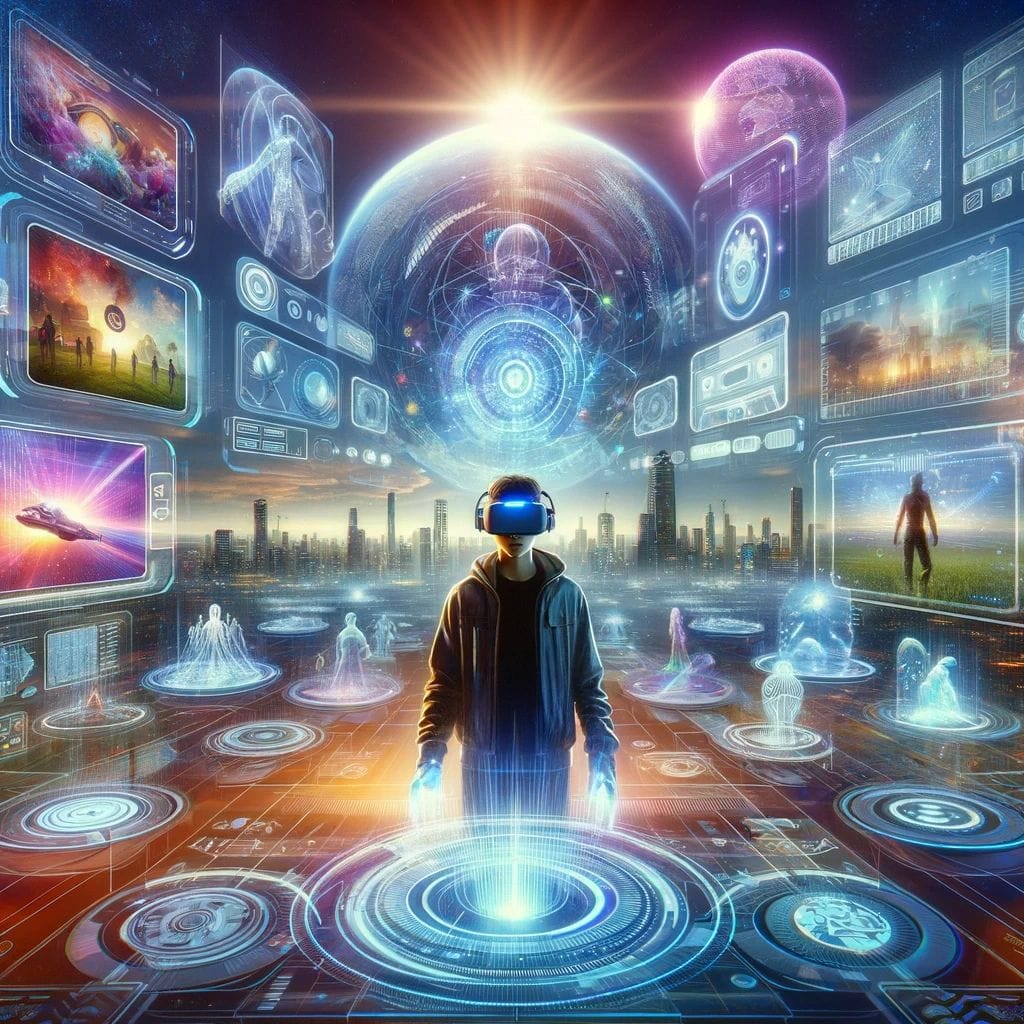
In the vast expanse of technological innovation, virtual reality (VR) emerges as a beacon of transformation within the entertainment industry. Once confined to the imaginative realm of gaming, VR has embarked on a journey, charting new territories in cinema, music, and art. This evolution is not merely a transition; it's a revolution that redefines engagement, storytelling, and audience experience.
As we explore the burgeoning influence of VR, we delve into its impact on traditional entertainment forms — transforming movie theaters into interactive realms, concert halls into global stages, and art galleries into boundless landscapes. This blog post ventures into the heart of this metamorphosis, uncovering the nuanced ways in which VR is crafting new worlds of immersive experiences.
Our expedition into the virtual realm is more than a mere observation; it's a holistic understanding of VR's capability to craft experiences that resonate on a profound level. The implications of this technology extend beyond the novelty of immersion, suggesting a future where the virtual and the real harmoniously intersect to create previously unimaginable experiences.
In this narrative, we do not just foresee the future; we actively engage with the possibilities that VR holds. Through a lens that is both analytical and imaginative, we aim to present a tapestry of potentialities that VR weaves into the fabric of entertainment. This is not just a glimpse of what is to come but an invitation to reimagine what entertainment can be in the embrace of virtual reality.
Why Futuristic Projection?
The art of looking forward is integral to the evolution of entertainment — a field inherently linked to the rhythms of technological progress. By employing futuristic projection, we not only envision the potential heights that VR might ascend to but also prepare the scaffolding upon which these dreams will materialize.
The impetus for projecting the future of VR in entertainment stems from a desire to understand and anticipate the needs of tomorrow's audiences. It is driven by a commitment to innovation, where the possibilities of virtual worlds can be as tangible and affecting as the real world. By imagining the future, we carve out a space for new ideas to flourish and for creative expression to find new avenues.
In this exploration, we rely on the patterns of the past and the momentum of the present to forecast the landscape of the future. The trajectory of VR has shown us that what once seemed like distant science fiction is rapidly becoming attainable reality. Futuristic projection is our compass in navigating this reality, pointing us towards horizons rich with the potential for groundbreaking forms of entertainment that engage the mind, stir the soul, and captivate the heart.
As we step into the realm of possibility, we acknowledge the transformative power of VR technology as a cornerstone for future entertainment experiences. We imagine worlds where the barriers between the audience and the spectacle dissolve, where the passive consumption of content gives way to active participation, and where the traditional boundaries of space and time are redefined by the limitless potential of virtual spaces.
Current State of Affairs
Virtual reality is presently at a pivotal juncture, having branched out from its gaming genesis to infuse itself into the broader spectrum of entertainment. In the realm of cinema, VR has ushered in an era where viewers transcend their roles as spectators to become part of the narrative fabric itself. Films are no longer watched; they are experienced, with audiences navigating storylines that unfold in a 360-degree panorama.
In the world of music, VR concerts are dismantling geographical barriers, allowing fans from across the globe to congregate in a single virtual space. These events offer a multi-sensory experience that replicates the energy of live performances, allowing for a connection that is both intimate and communal.
Art too has found a new dimension within VR. Galleries and exhibitions now extend beyond the constraints of physical walls, granting patrons the ability to traverse artistic realms from the comfort of their homes. This new canvas has given artists the tools to craft experiences that are not just seen but felt, offering a deeper connection to the art through immersion.
The current state of VR in entertainment is marked by experimentation and bold forays into the unknown. While VR cinemas, virtual concerts, and digital galleries are still in their nascent stages, they signal a seismic shift in how content is delivered and consumed. They are the harbingers of an entertainment revolution, one that promises to blend the digital with the physical, the imagined with the real, and in doing so, redefine the very essence of how stories are told and experiences are shared.
Methodology for Projections
Our approach to projecting the future of VR in entertainment is multi-faceted, grounded in empirical research and enriched by expert insights. We examine the trajectory of VR's evolution by analyzing market trends, consumer behavior, and technological advancements. Our methodology involves synthesizing data from industry reports, scholarly articles, and interviews with thought leaders in the fields of technology and entertainment.
We cross-reference historical growth patterns of VR with current market dynamics to identify enduring trends and potential inflection points. This analytical process is complemented by a qualitative assessment of the cultural and societal shifts that influence consumer expectations and desires. By understanding the drivers behind VR's adoption and the barriers to its widespread use, we can construct a nuanced forecast that considers both the technological potential and the human element.
To ensure a comprehensive perspective, we also engage with content creators, software developers, and hardware manufacturers who are at the forefront of VR. Their firsthand experiences and insights provide a window into the future, revealing the challenges they face and the innovations they foresee. This dialogue helps us to ground our projections in the practical realities of the industry while also embracing the ambitious vision that fuels progress.
Our methodology is iterative and collaborative, recognizing that the future is not a fixed destination but a landscape of possibilities. By blending data-driven analysis with creative speculation, we aim to present a projection that is both informed and inspiring, providing a roadmap for the enthralling journey that VR in entertainment is poised to embark upon.
Projection 1: A Decade Down the Line
In a decade's span, we can expect VR to have woven itself into the fabric of everyday entertainment. One might step into a movie theater only to transcend physical space, entering a narrative world that responds to their choices and allows them to engage with the story in real-time. This could signify the birth of a new genre, where cinema converges with gaming, offering a choose-your-own-adventure style of film where the viewer is an active participant in the unfolding drama.
Virtual reality concerts could evolve to allow fans to not only select their vantage point but also interact with the performers and other attendees. The sense of presence these concerts provide could be so palpable that attendees might forge memories as vivid as those from physical events. This technology could open the door to new forms of artistry, where the concert is not just heard but also shaped by the audience, creating a dynamic performance that is unique to each showing.
As VR becomes more refined and accessible, art exhibitions might transcend the visual, offering tactile and olfactory feedback that enriches the viewing experience. The brush strokes of a painting could be felt, and the scent of the depicted environments could be inhaled, enhancing the connection between the artwork and the viewer.
This projection is not without its implications. With content creation taking on new dimensions, intellectual property rights could become more complex, and the ethical considerations of such immersive experiences would need careful navigation. However, these challenges are merely stepping stones toward a more immersive and interactive future of entertainment.
Implications of Projection 1:
The anticipated ubiquity of VR in a decade's time carries profound implications for the industry at large. As interactive and immersive experiences become the norm, content creators will likely evolve into experience designers. The role of filmmakers and artists may shift as they adapt to crafting narratives and artworks that are not merely observed but interacted with and influenced by the audience.
The distribution of entertainment could undergo a seismic transformation, with virtual platforms becoming as prominent as physical venues. This democratization of access has the potential to disrupt traditional business models, offering new revenue streams and marketing strategies, but also necessitating new legal frameworks to manage digital rights and royalties in a complex, interconnected ecosystem.
The ethical landscape of VR entertainment will become a crucial consideration. As the lines between reality and virtual experiences blur, issues of content regulation, age-appropriateness, and psychological impact will come to the fore. The immersive nature of VR raises questions about the long-term effects of such deep engagement with digital content and the responsibility of creators to safeguard users' well-being.
Moreover, the potential for data privacy breaches will intensify with the integration of VR into everyday life. User interactions within virtual spaces will generate vast quantities of data, presenting challenges in ensuring the security and privacy of personal information. The industry must navigate these waters with care, developing robust privacy protections and transparent data practices.
In essence, the expansion of VR will not only redefine the art of storytelling and the experience of art but also prompt a reevaluation of the social, ethical, and legal structures that underpin the entertainment industry. As we embrace this new reality, we must do so with a cognizance of its far-reaching implications, ensuring that the future of entertainment remains not only innovative but also responsible and inclusive.
Projection 2: The Sensory Revolution
As we cast our gaze further into the future, beyond the immediate horizon, the integration of VR with other sensory augmentation technologies could give rise to a full-fledged sensory revolution. This era of immersive experiences could extend far beyond the visual and auditory, involving haptic feedback suits, olfactory devices, and even taste synthesis to create a fully embodied virtual experience.
Imagine attending a virtual art exhibition where you can not only see but also feel the texture of Van Gogh's thick impasto strokes, or a virtual cooking show where you can savor the dishes being prepared. VR could transform into a holistic experience that engages all the senses, providing a depth of immersion previously unthinkable.
The possibility of sensory-rich virtual environments opens the door to new forms of storytelling and artistic expression. Filmmakers could craft experiences that not only show a rainy scene but also allow the audience to feel the cool mist on their skin. Musicians might perform concerts where the audience can feel the vibration of every note, not just in their ears but resonating through their entire body.
This level of immersion could revolutionize the fields of education and training, enabling learners to gain hands-on experience in a safe, controlled virtual environment. It could also have therapeutic applications, providing controlled sensory experiences to treat various psychological conditions.
The integration of VR with other senses holds the promise of making virtual experiences indistinguishable from reality, providing a level of presence and engagement that could redefine what it means to experience digital content.
Implications of Projection 2:
The sensory revolution envisaged in the realm of VR carries with it a constellation of implications that reach far beyond entertainment. The confluence of virtual reality with other sensory inputs has the potential to craft experiences that could enrich the human experience in profound ways, yet also pose nuanced challenges.
In the sphere of social interaction, the depth of sensory immersion could transform the way we connect with others. Virtual spaces may become venues for meaningful interactions that rival physical presence, challenging our notions of distance and presence. The capacity to share not just sights and sounds but also touch and smell could forge connections that transcend the limitations of geography, potentially redefining the essence of community and companionship.
Educationally, the use of multisensory VR could revolutionize learning, offering immersive environments that enhance understanding and retention. Students could virtually travel through historical events, conduct complex scientific experiments, or practice medical procedures with a level of realism that traditional methods cannot match.
In the domain of healthcare, such immersive experiences could be harnessed for therapeutic interventions, offering new avenues for treatment of conditions like PTSD or anxiety disorders. The ability to simulate calming environments or controlled exposure to stressors could make VR a powerful tool in mental health therapy.
Yet, the advent of such immersive technology is not without potential pitfalls. The blurring of lines between reality and virtuality raises questions about the psychological impact of long-term exposure to multisensory VR environments. Ensuring the mental well-being of users will become paramount, necessitating research and potentially new regulatory standards.
Moreover, as virtual experiences become more lifelike, the issue of digital addiction could become more pressing. Balancing the benefits of immersive VR with the need to maintain a connection to the physical world will be crucial. The challenge will be to harness the power of VR as an enhancement to life, rather than an escape from it.
As we look toward a future where VR can stimulate all senses, we are reminded of the responsibility that comes with creating such powerful experiences. The potential of VR to enrich human life is immense, but it must be developed with a careful consideration of its impact on individuals and society. The sensory revolution in VR will be as much about technological innovation as it is about ethical stewardship and human-centric design.
Projection 3: The Emergence of Virtual Co-Creation and Shared Realities
Looking further ahead, a revolutionary aspect of VR in entertainment could be the emergence of virtual co-creation and shared realities. This projection sees VR evolving from a platform for consuming content to a dynamic space where audiences become creators, collaborating in real-time to shape and redefine their entertainment experiences.
In this future, VR could enable groups of individuals, irrespective of their physical locations, to come together in virtual environments to co-create experiences. This could manifest in various forms - from collectively designing and exploring virtual worlds, to co-writing stories or creating art in collaborative virtual studios. The boundaries between creator and consumer would blur as VR democratizes content creation, making it more accessible and participatory.
The technology could evolve to allow real-time collaboration, where users influence and alter the course of a movie or a theatrical performance as it unfolds, making each iteration of the experience unique. Virtual reality could become a canvas for collective imagination, where shared realities are woven from the contributions of each participant, offering a new paradigm in interactive and personalized entertainment.
Implications of Projection 3:
The implications of such a shift are profound and multifaceted. On a social level, this co-creative approach could foster a new sense of community and collective ownership in entertainment. It would encourage creativity and innovation, as diverse ideas and perspectives converge in these shared virtual spaces.
From an educational standpoint, such collaborative environments could become powerful tools for learning and skill development, offering hands-on experience in a variety of fields. This could have significant impacts on education, professional training, and personal development, as VR becomes a space for shared knowledge and experience.
However, this projection also presents unique challenges, particularly in terms of content moderation and intellectual property. As multiple users contribute to a single virtual experience, determining ownership and responsibility for the content becomes complex. Additionally, ensuring a safe and inclusive environment for all participants will be crucial, as these shared spaces will need to navigate cultural, linguistic, and social differences.
Moreover, this level of interactivity and co-creation in VR would demand sophisticated technology and robust infrastructure. Ensuring accessibility and preventing a digital divide in the use of such advanced VR applications would be imperative to avoid exacerbating social inequalities.
As we envisage a future where virtual co-creation and shared realities redefine entertainment, we recognize the need for thoughtful consideration of its societal, ethical, and technological implications. This projection highlights the potential for VR to not just entertain but to connect and empower individuals, inviting us all to contribute to the tapestry of our virtual future.
Projection 4: The Integration of VR with Real-Time Data and AI Personalization
In a future projection of VR in entertainment, we might witness the integration of virtual reality with real-time data analytics and artificial intelligence (AI) to create deeply personalized and responsive entertainment experiences. This vision sees VR systems that are not only immersive but also intuitively responsive to the user's preferences, behaviors, and even emotions.
Imagine VR experiences that adapt in real-time, altering storylines, environments, and challenges based on the user's reactions and choices. AI could analyze a user's past interactions, emotional responses, and even biometric data to tailor experiences that are uniquely engaging. This could lead to a new genre of entertainment where each VR journey is as individual as the user, with AI continuously learning and adapting to provide the most compelling and satisfying experience possible.
Implications of Projection 4:
The implications of this level of personalization in VR are vast. On one hand, it promises an unprecedented level of engagement, offering experiences that are tailored to individual tastes, moods, and learning styles. This could revolutionize not only entertainment but also educational and therapeutic applications of VR, providing customized learning environments or mental health interventions.
However, the integration of AI and real-time data in VR also raises significant privacy and ethical concerns. The collection and analysis of personal data, especially sensitive information like biometric data, necessitate stringent data protection measures and ethical considerations. Users would need assurance that their data is handled responsibly and that their privacy is safeguarded.
Furthermore, this level of personalization could have psychological implications. The boundary between virtual and real experiences might become increasingly blurred, potentially impacting how individuals perceive and interact with the real world. There could also be concerns about users becoming isolated in personalized virtual bubbles, detached from shared experiences and perspectives.
The challenge will be to harness the potential of AI and real-time data in VR in a way that enriches user experience while respecting privacy, promoting inclusivity, and fostering a healthy relationship with technology. As we navigate this potential future, the focus must be on developing VR experiences that are not only technologically advanced but also socially and ethically conscious, ensuring that the virtual worlds we create are as considerate as they are captivating.
Projection 5: The Rise of Virtual Reality as a Global Social Platform
A future projection for VR in entertainment is its evolution into a global social platform that transcends traditional social media. In this vision, VR becomes a space where people from all corners of the world can interact, share experiences, and build communities in a way that mimics real-world social dynamics but in a virtual setting. This could lead to the creation of vast, persistent virtual worlds, akin to a global digital metropolis, where users can live, work, play, and socialize.
Within these virtual worlds, people could attend global events, participate in communal activities, and engage in social causes, all within the confines of VR. These spaces could host virtual markets, educational institutions, entertainment venues, and more, offering a comprehensive digital society. The potential for cross-cultural interaction and understanding in such a setting is immense, providing a platform for global connection and collaboration.
Implications of Projection 5:
This projection carries transformative implications for how we perceive and interact within digital spaces. VR as a global social platform could redefine the concept of community, breaking down geographical and cultural barriers to create a more interconnected and empathetic global society. It could offer new opportunities for cultural exchange, global collaboration, and shared experiences on a scale never seen before.
However, such a comprehensive digital society in VR also poses significant challenges. Governing these spaces, ensuring equitable access, and managing the societal dynamics of such a diverse and expansive community would be complex. Issues related to digital citizenship, virtual economies, and the governance of virtual spaces would become increasingly important.
There is also the concern of digital divide and inclusivity. Ensuring that this global VR platform is accessible to people from all socioeconomic backgrounds would be crucial to avoid creating a segregated digital society. The platform would need to be designed with diversity and inclusivity at its core, ensuring that it caters to a wide range of needs, preferences, and cultural backgrounds.
Furthermore, the psychological impact of such immersive and persistent virtual social environments must be considered. Balancing virtual interactions with physical-world relationships and activities would be important to maintain a healthy lifestyle and well-being.
In summary, the potential of VR as a global social platform offers exciting possibilities for the future of social interaction and community building. However, it also brings to the forefront the need for thoughtful consideration of the social, ethical, and psychological aspects of living in such interconnected virtual spaces. As we move towards this possible future, it becomes imperative to approach it with a vision that is as responsible as it is revolutionary, ensuring that the virtual worlds we create are spaces of positive and inclusive interaction.
Conclusion
As we stand on the brink of what could be the greatest evolutionary leap in entertainment since the advent of cinema, we recognize that virtual reality holds the keys to uncharted worlds of experiences. The journey VR has embarked upon is replete with promise and potential, leading us to a future where the very concept of 'experience' is reimagined.
The implications of VR's progression are as complex as they are exciting. We face not only the thrilling prospect of new forms of storytelling and art but also the necessity to address the ethical, psychological, and social questions that accompany such profound change. The immersive power of VR brings with it a responsibility to wield it wisely, ensuring that as we push the boundaries of what is possible, we remain anchored to what is beneficial for society at large.
As we envision a future punctuated by immersive, multisensory experiences, we must also advocate for a future that prioritizes human connection, well-being, and the equitable distribution of these technological marvels. The potential of VR to revolutionize entertainment is boundless, but it will require a concerted effort from creators, technologists, regulators, and users to navigate this new landscape with foresight and humanity.
The VR odyssey is just beginning, and its trajectory is ours to chart. This technology invites us to not only witness the future of entertainment but to actively participate in its creation. Let us embrace this opportunity with both imagination and integrity, crafting a future of entertainment that is as enriching as it is enthralling. In the symphony of the virtual and the real, every one of us is both audience and composer, and the next movement is poised to be nothing short of revolutionary.
Author’s Note
As an enthusiast and researcher in the field of emerging technologies, specializing in data visualization with mixed reality (AR/VR), my journey into the world of virtual reality has been nothing short of fascinating. This blog post is a culmination of my exploration into the expansive possibilities that VR presents in reshaping our entertainment landscape. I extend my heartfelt gratitude to the myriad of technologists, artists, and visionaries whose insights and innovations have inspired the projections discussed here.
A special acknowledgment goes to the community of VR users and developers whose experiences and feedback continually shape the future of this technology. I also wish to express my appreciation to colleagues and mentors in the field of digital media studies for their invaluable contributions to my understanding of the societal impacts of technology.
Lastly, I would like to note that the projections and implications discussed in this blog post are speculative and based on current technological trends and expert opinions. They are intended to spark imagination and discussion about the future of VR and do not represent definitive predictions.
References
- Lanier, Jaron (2017), “Dawn of the New Everything: Encounters with Reality and Virtual Reality”, Henry Holt and Co.
- Bailenson, Jeremy (2018), “Experience on Demand: What Virtual Reality Is, How It Works, and What It Can Do”, W.W. Norton & Company.
- Schroeder, Ralph (2018), “Virtual Reality and the Metaverse: Platforms, Hardware, and Applications”, Springer.
- Guttentag, Daniel A. (2010), “Virtual reality: Applications and implications for tourism”, Tourism Management, 31(5), 637-651.
- Steuer, Jonathan (1992), “Defining Virtual Reality: Dimensions Determining Telepresence”, Journal of Communication, 42(4), 73-93.