Have you ever paused to consider what truly nourishes the soul? Is it the fleeting moments of joy or the profound sense of purpose that pervades our lives, even amidst chaos?
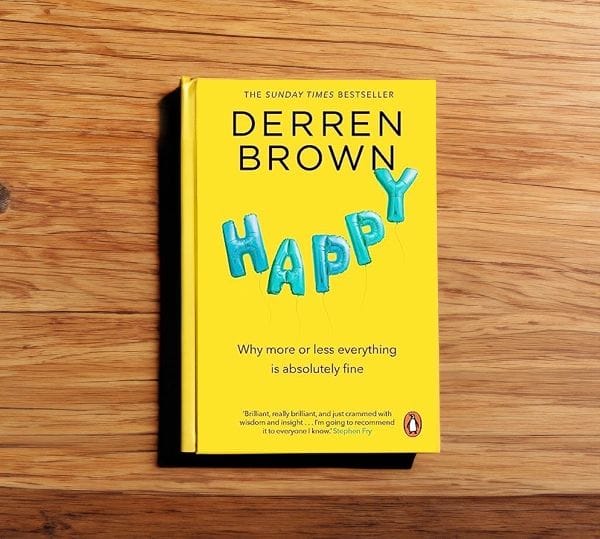
This contemplation led me to an enlightening crossroad where Derren Brown's "Happy: Why More or Less Everything is Absolutely Fine" intersected with my literary journey, ultimately guiding the narrative arc of my book, "Meaningfulness".
Brown's "Happy" emerges not merely as a book but as a philosophical guide that challenges the orthodoxies of the happiness narrative. Written by a master mentalist, "Happy" is steeped in the wisdom of Stoic philosophy, blended with a modern understanding of psychology, offering a narrative that is as thought-provoking as it is revolutionary.
My overall impression of "Happy" is one of profound respect and acknowledgment. It stands as a pillar that holds up the roof under which my own book, "Meaningfulness", found shelter. Brown's musings on the nature of happiness—its illusions, its ephemeral quality, and its deep roots in our psyche—resonated with my exploration of meaningfulness. His work didn't just influence my writing; it provided a compass that directed me towards a more nuanced comprehension of what it means to live a life saturated with significance.
Author’s Background
Derren Brown, the erudite author of "Happy", possesses a unique blend of expertise and experience that positions him as an authoritative voice on the subject of happiness and human psychology. His background as a mentalist and illusionist, combined with a sharp intellect and a deep interest in the workings of the human mind, gives him a distinctive edge in dissecting the fabric of what makes us tick emotionally.
Brown's career has been marked by an exceptional understanding of perception, belief, and the psychological underpinnings of the human experience. This acumen comes from years of engaging with people's minds, both on stage and off, providing him with rich insights into the human condition. His qualifications extend beyond his entertainment prowess; they are anchored in a scholarly interest in philosophy, psychology, and the art of critical thinking.
"Happy" is not an isolated case in Brown's repertoire. His previous works often touch upon themes that are intricately linked to the human psyche, including manipulation, the power of suggestion, and the construction of reality. Each of these works peels back layers of the human experience, revealing the complexity of our pursuit of satisfaction and the often misguided routes we take in search of it.
In "Meaningfulness", I drew heavily upon the depth of understanding that Brown brings to these subjects. His ability to elucidate complex ideas with clarity and wit provided a fertile ground from which my own ideas could grow. His influence is a testament to the breadth of his knowledge and the impact of his intellectual contributions on the topic of what it truly means to lead a fulfilled life.
Summary
"Happy: Why More or Less Everything is Absolutely Fine" by Derren Brown is an intricate tapestry that weaves together philosophical insights, psychological wisdom, and pragmatic advice to challenge and redefine our pursuit of happiness. Brown debunks the myth that happiness is a perpetual state of elation to be chased and instead posits that it arises from our internal landscape—how we react to life's vicissitudes rather than the events themselves.
The main themes of the book are as thought-provoking as they are varied: the illusion of control and the Stoic philosophy of focusing on our own reactions; the critique of the self-help industry's flawed narratives; the embracing of "good enough" over the unattainable perfect; and the importance of reframing our perspectives to manage our emotional well-being. Brown also highlights the peril of materialism, advocating for finding contentment in our present state and the connections we hold dear, rather than in the relentless accumulation of possessions.
The structure of "Happy" is methodical yet fluid, guiding the reader through historical context, personal anecdotes, and rigorous research. Brown divides the book into sections that mirror the progression from theory to practice, leading with a philosophical foundation before moving into the application in everyday life. This organization not only bolsters his arguments but also aids in the digestion of complex concepts, making the book an accessible manual for anyone looking to cultivate a more content and grounded existence.
In drafting "Meaningfulness", I found the thematic richness and the structure of "Happy" to be enlightening. Each theme presented by Brown became a stepping stone in my exploration of a life imbued with purpose. I mirrored his methodical approach in my writing, starting with the broader concepts of meaningfulness and gradually narrowing down to the personal and practical implications. Brown's masterful organization of content reinforced the effectiveness of building a strong theoretical foundation before venturing into practical applications, a technique I adopted to support my message that a meaningful life is one lived with conscious intent and thoughtful reflection.
Key elements
Derren Brown's book is a thought-provoking exploration into the essence of happiness. Let's extract the key elements of the book for a broader overview:
- The Illusion of Control: Brown dismantles the common belief that we have significant control over the events in our lives. He proposes that our happiness is often hindered by our illusions of control, especially in areas where we actually have very little power. By recognizing the limits of our control, we can reduce unnecessary stress and frustration. This insight aligns with Stoic philosophy, which teaches that we should focus on our internal responses rather than external circumstances. The eye-opening aspect is that once we accept the randomness of life and focus on our internal reactions, we become more resilient and adaptable, leading to a more profound and stable form of happiness.
- Critique of the Self-Help Industry: Brown offers a critical view of the self-help industry, which he suggests sells a narrative of happiness that is not only oversimplified but often unachievable. This industry promotes the idea that happiness is a constant state of euphoria that can be attained through certain steps or practices. Brown's argument is eye-opening as it highlights how this perspective can lead to a cycle of perpetual dissatisfaction, as people feel inadequate when they inevitably fail to achieve perpetual bliss. By critiquing this approach, Brown invites readers to seek a more nuanced understanding of well-being that accepts life's inherent complexities and challenges.
- Stoic Philosophy: Stoicism, an ancient Greek philosophy, provides a foundation for Brown's views on happiness. The Stoics believed that true contentment comes from within and that one should focus on what they can control — their virtues and reactions to the world. Brown's discussion of Stoicism is insightful because it offers a time-tested framework for dealing with life's difficulties. Instead of being swayed by every external circumstance, the Stoic approach encourages emotional regulation and a focus on self-improvement, which can lead to a more durable sense of happiness.
- The Concept of "Good Enough": In a world that often celebrates the best, Brown's promotion of the "good enough" philosophy is particularly striking. He suggests that striving for perfection in all areas of life is not only unrealistic but can also be a source of misery. By embracing "good enough," individuals can experience a greater sense of accomplishment and contentment. This approach reduces the pressure to be perfect and helps individuals to celebrate their achievements, even if they're not flawless. It’s an eye-opening perspective in a culture obsessed with the best, redirecting the focus toward realistic and fulfilling goals.
- Reframing Success and Failure: Brown argues that society's conventional definitions of success and failure are too narrow and that we should embrace a broader perspective. He suggests that what is often labeled as failure can, in fact, be a crucial stepping stone to success. This reframing is enlightening because it challenges the stigma associated with failure, encouraging individuals to take risks and learn from their experiences. By redefining failure as an opportunity for growth, Brown opens up a more compassionate and constructive way to approach life's inevitable setbacks.
- Importance of Perspective: Brown's examination of perspective as a determinant of happiness is revealing. He shows how the same event can lead to different emotional outcomes depending on how it is interpreted. By consciously changing our interpretations — a process known as cognitive reframing — we can manage our emotional responses more effectively. This insight is eye-opening as it empowers individuals to take charge of their happiness by actively shaping their perspectives on life events, leading to greater emotional well-being.
- Materialism vs. Contentment: In addressing the pitfalls of materialism, Brown confronts a central tenet of consumer culture. He posits that the relentless pursuit of material goods and status symbols does not lead to lasting happiness. Instead, he suggests that true contentment arises from an appreciation of what we already have and who we are. This perspective is eye-opening as it contrasts with widespread societal messages and encourages a shift toward gratitude and simplicity.
- Embracing Uncertainty: Brown's encouragement to embrace uncertainty and change rather than resist them is particularly insightful. He argues that our fear of the unknown can lead to a restrictive life, where we are constantly seeking security in an unpredictable world. By accepting uncertainty as an inherent part of life, we can become more adaptable and open to new experiences. This realization is eye-opening as it challenges the natural human desire for predictability and control, advocating for a more flexible and courageous approach to life.
- Social Comparison: Brown addresses the negative impact of social comparison, especially in the age of social media, where people often compare their everyday lives to the highlight reels of others. This comparison can lead to feelings of inadequacy and discontent. Brown's insights here are particularly relevant, as they highlight the importance of focusing on our own paths and values rather than measuring ourselves against others. It's an eye-opening call to action to disconnect from the comparison trap and cultivate self-acceptance.
- Value of Connections: The importance of personal relationships and community is a standout point in Brown's book. He underscores the idea that happiness is deeply rooted in our connections with others. This is eye-opening because it shifts the focus from individual achievement and self-centered goals to the collective experience of joy and fulfillment. Relationships provide support, meaning, and purpose, which are essential components of a happy life. Brown's emphasis on connection challenges the modern glorification of independence and self-reliance, reminding us that our bonds with family, friends, and community are vital to our well-being.
- Mindfulness and Acceptance: Brown champions mindfulness and acceptance as tools for managing negative emotions and thoughts. By being present in the moment and accepting our experiences without judgment, we can mitigate the impact of distressing emotions. This approach is eye-opening because it contrasts with common reactions to negative feelings, such as denial or suppression, which can often exacerbate problems. Brown's perspective encourages a healthier relationship with our inner landscape, promoting emotional resilience and a more peaceful state of mind.
Critical Analysis
In "Happy: Why More or Less Everything is Absolutely Fine," Derren Brown constructs a formidable case for rethinking the conventional pursuit of happiness, offering a compelling argument that stands up to critical scrutiny. The book's strength lies not only in its philosophical underpinnings, borrowed from the Stoics, but also in its rigorous application of psychological research. Brown challenges the reader to consider happiness not as a series of checkmarks on a societal list of achievements but as a state of being that is both complex and deeply personal.
The evidence Brown presents is both qualitative and quantitative, ranging from anecdotes drawn from his own experiences to studies that underscore our misconceptions about what happiness is and where it comes from. His arguments are further bolstered by the historical perspectives of philosophers who have tussled with the notion of contentment, joy, and the good life. The multidisciplinary approach ensures that his thesis is not just a singular narrative but a well-rounded discussion that invites reflection and introspection.
As for the contribution to the broader conversation about meaningfulness, Brown's "Happy" serves as a critical pivot point. It does not merely add to the dialogue; it steers it in a new direction. The book cuts through the noise of happiness clichés and instead offers a vision of life's satisfaction that is attainable, realistic, and deeply fulfilling. It encourages a cultural shift from the relentless pursuit of high-intensity happiness to the cultivation of a stable, meaningful existence that can weather the ebbs and flows of life.
This nuanced understanding of happiness, as presented by Brown, has had a significant influence on the narrative of "Meaningfulness". In my work, I sought to extend his arguments into the realm of life's purpose, arguing that the search for meaning is not just complementary to the pursuit of happiness, but is perhaps the more crucial quest. Brown's evidence and arguments provided a backdrop against which the themes of "Meaningfulness" could be explored, offering a richer and more comprehensive examination of what it means to live a life that is not just happy, but meaningful.
Personal Reflection
In my literary journey crafting "Meaningfulness," I found myself deeply influenced by the profound insights of Derren Brown's "Happy: Why More or Less Everything is Absolutely Fine." As I navigated the intricate pathways of what constitutes a meaningful life, I resonated with Brown's exploration of happiness as an internal state, shaped by our perceptions and internal dialogues.
Brown's lucid critique of the self-help industry, which often peddles a shallow, one-size-fits-all approach to happiness, steered me away from the tropes of instant gratification and toward the pursuit of something far more profound. This critique was instrumental in my writing, encouraging me to delve into the deeper waters of life's purpose and significance, beyond the ephemeral highs of material success.
The nuanced differentiation between happiness and meaningfulness is a theme that wends its way through both our works. In "Happy," Brown posits that happiness can be a fleeting emotion, whereas "Meaningfulness" extends this dialogue to assert that a life of significance often roots in sustained contentment and purpose, not just the sporadic bursts of joy.
A poignant parallel lies in the emphasis on human connections. Brown's emphasis on the value of relationships echoed in my own conviction that meaningfulness is inseparable from the connections we nurture. His perspective validated my belief that the fabric of a purposeful life is woven through our bonds with others.
Furthermore, Brown's commendation of embracing the "good enough" resonated with me. His stance against the relentless pursuit of perfection bolstered my conviction that meaningfulness does not require a flawless existence. This perspective enriched my narrative, underscoring that authenticity and staying true to one's values are the cornerstones of a meaningful life.
As Brown eloquently champions cognitive reframing and the acceptance of life's unpredictability, I found such concepts to be integral to "Meaningfulness." They became guiding principles in my writing, shaping my understanding that meaning often emerges in how we choose to interpret and respond to life's myriad challenges.
In sum, "Happy" provided a philosophical and psychological scaffolding that underpinned the structure of "Meaningfulness." It offered me a lens to view happiness not as the destination but as part of a richer journey toward finding depth, significance, and connection in every facet of life.
Conclusion
In the panorama of literature on happiness and the human condition, Derren Brown's "Happy: Why More or Less Everything is Absolutely Fine" stands as a landmark, bridging the abstract and the actionable in a dance of eloquent prose and piercing insights. It is a work that does not merely skim the surface of contentment but dives into its depths, exploring its intricacies with the precision of a philosopher and the understanding of a psychologist. The book's discourse on happiness is an essential thread in the broader tapestry of meaningfulness, providing a counterpoint to the often one-dimensional conversation on the subject.
Reflecting on the journey through its pages, I am left with an enduring sense of gratitude for the perspectives it has offered and the wisdom it has imparted. "Happy" has not only informed my understanding but has also provided a framework that has richly complemented and profoundly deepened the exploration in my own work, "Meaningfulness". It is a book that I find myself returning to, each visit uncovering new layers and hidden corners of contemplation.
I wholeheartedly recommend "Happy" to anyone who seeks more than just fleeting joy — to those who are on a quest for a life of depth, resilience, and authentic satisfaction. Whether you are a thinker, a dreamer, or someone who takes pleasure in the practical application of philosophical thought, you will find in this book a companion for the journey. For anyone who has ever pondered what it means to live not just a happy life, but a meaningful one, Derren Brown's "Happy" is an indispensable guide that will illuminate, challenge, and inspire.
References
- Brown, D. (2016), "Happy: Why More or Less Everything is Absolutely Fine", Transworld Digital.
Disclaimer
Please note that the perspectives and insights shared in this review are my own interpretations and reflections. While I stand by my views and the impact the book has had on my thoughts and my own work, I fully recognize and respect that others may have different opinions or experiences. Literature is a subjective encounter, and I welcome diverse interpretations and discussions that may arise from this shared literary journey.